Jay Rockefeller Quotes
For the past three years, the Senate intelligence committee has avoided carrying out its oversight of our nation's intelligence programs whenever the White House becomes uncomfortable with the questions being asked. The very independence of this committee is called into question.
Rockefeller, John D. "Statement on the Senate Intelligence Committee's Vote on the NSA Warrantless Surveillance Program." Press Release, Office of Senator Jay Rockefeller, 7 Mar. 2006.


The appropriations committee allocates the monitory appropriations of all the agencies and it is a large committee. The appropriations committee members read the reports of the committee with oversight over an agency and makes judgments about the appropriation size compared to what the agency committee has authorized. But with intelligence there is nothing of detail in the report so the appropriations committee have little or no idea of what they are appropriating money for. But the appropriations committee will not delegate the appropriation decision to the Intelligence Committee.


The Senate was investigating a scandal where the George W. Bush White House had induced the Attorney General, Alberto Gonzalez, to fire 8 of their own political U. S. Attorney appointments because they had or were investigating/prosecuting Republican politicians for corruption or not prosecuting Democrats vigorously enough. Gonzalez took the responsibility for the firings but did “not remember” why each had been fired nor was there any record in the Justice Department indicating any shortcoming with their jobs. The White House political operatives refused to testify under oath citing “Executive Privilege.”

President George W. Bush, during the War on Terror, asserted the authority to contravene laws passed by Congress and signed by a previous president. He further, argued that he did not have to inform Congress when he ordered steps that broke the existing laws. His position was based on his claim that there were inherent Presidential powers in wartime granted by the Constitution and the Congress could not override the Constitution.


Senator Dianne Feinstein, Chairman of the Senate Intelligence Committee, had released an unclassified Summary of the Committee Report on the CIA using torture and perverse treatment of suspect terrorists in the aftermath of the 9-11 attack on New York. Most Republicans argued vehemently that the Report should be classified and kept secret as the CIA behavior was so egregious, unpalatable, and morally reprehensible that there would be negative consequences including perhaps demonstrations and attacks against Americans in foreign countries. Moreover, Terrorist organizations would use the heinous CIA behavior as a recruiting tool for anti-American terrorists. McCain, who had himself been the victim of North Vietnamese torture cited the moral and ethical reasons to prohibit torture but also explained what has been proven over and over again that torture victims will tell the torturer any nonsense that they think the torturer might believe just to get obtain relief from the agony of the torture.


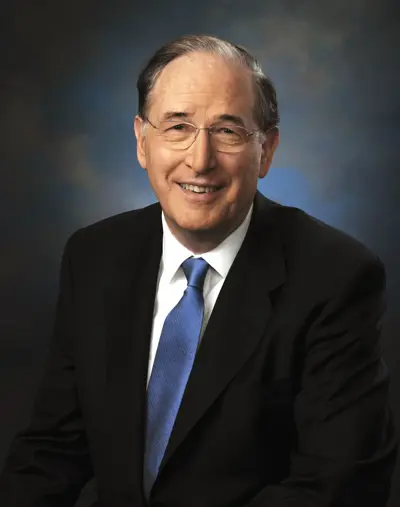
John Davison "Jay" Rockefeller IV is a retired American politician who served as a United States Senator from West Virginia (1985–2015). He was first elected to the Senate in 1984, while in office as Governor of West Virginia (1977–85). Rockefeller moved to Emmons, West Virginia, to serve as a VISTA worker in 1964 and was first elected to public office as a member of the West Virginia House of Delegates (1966-1968). Rockefeller was later elected West Virginia Secretary of State (1968-1973) and was president of West Virginia Wesleyan College (1973–1975). He became the state's senior U.S. Senator when the long-serving Senator Robert Byrd died in June 2010.
