Simon Wiesenthal Quotes
For me the Holocaust was not only a Jewish tragedy, but also a human tragedy. After the war, when I saw that the Jews were talking only about the tragedy of six million Jews, I sent letters to Jewish organizations asking them to talk also about the millions of others who were persecuted with us together - many of them only because they helped Jews.
Wiesenthal, Simon. Justice Not Vengeance. Grove Weidenfeld, 1989.


The Nazis and most of the Arabs were allies in WWII. The Jews of Palestine—although they were opposed to many of the British policies regarding Palestine—were active in the Allied cause contributing units to the British Army. Although the Germans were brutal to civilians, murdering millions, they refrained from public pronouncements or exhortations to kill civilians in most cases. The Arabs did not. The Mufti was actually given the rank of General in the Nazi SS and had his own SS unit. In this despicable exhortation he actually uses a concept and wording from the Koran. See {584355}. This quotation is important in that it refutes a common claim by some Palestinians that it was only the Germans who were responsible for the Holocaust and the post war Jewish Refugee problem and that the Palestinians had to bear the price rather than place Israel in Europe. This quotation and the other by the Grand Mufti prove that Palestinians were not only complicit in persecution of Jews but took a leadership and advocacy role.


Even some of the Muslim countries of the OIC were embarrassed by the blatantly anti-Semitic speech of the host country prime minister. He parroted the discredited canard of the forged Protocols of the Elders of Zion.

Ironically Germany and almost all Germans have repudiated the Nazi era and atrocities against the Jews and others. However, the Arabs many of whom were Nazi WWII allies still hold and spew false and dangerous Nazi propaganda. See {584354} for some of the earlier Arab Nazi activity.

Adolf Eichmann was a German Nazi war criminal who had been responsible for the murder of millions of people. At the end of WWII, he had escaped Germany and was living in South America. Israeli agents found him, kidnapped him, and brought him to Israel. There he received a very public trial, was found guilt, and executed. In the War on Terror at the beginning of the 21st century, the key terrorists that were captured in Afghanistan were sent to a special prison base in the American part of Cuba. They were held there but at first received no trials or hearings. They were not prisoners of war, and not criminals where there were legal procedures for handling them. This was a new area. Some argued that they should all get trials. The Supreme court ruled that they at least had to get hearings. The correct handling was a major debate.

It is amazing what explanations religious and biased fanatics can come up with to explain history.

The assassination was attempted in 1944 and after its failure, he was shot be a firing squad.
The non-violent resistance tactics of the White Rose were so threatening to the Nazi German regime that Sophia and other members were executed by guillotine beheading as a particularly harsh example. The graphic is a postage stamp that Germany has issued in her honor.


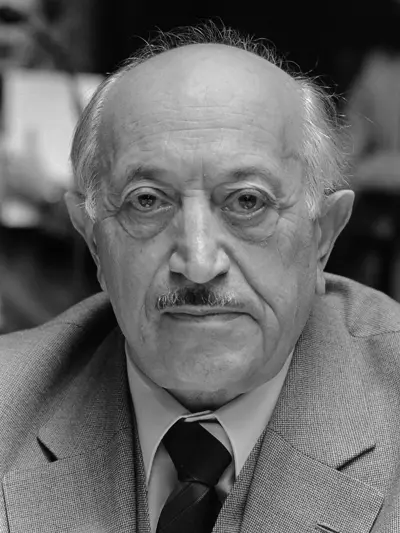
Simon Wiesenthal KBE was a Jewish Austrian Holocaust survivor, Nazi hunter, and writer. He studied architecture and was living in Lwów at the outbreak of World War II. He survived the Janowska concentration camp (late 1941 to September 1944), the Kraków-Płaszów concentration camp (September to October 1944), the Gross-Rosen concentration camp, a death march to Chemnitz, Buchenwald, and the Mauthausen-Gusen concentration camp (February to 5 May 1945).
