Simon Wiesenthal Quotes
When history looks back, I want people to know that the Nazis could not kill millions of people with impunity.
Wiesenthal, Simon. Justice Not Vengeance. Grove Weidenfeld, 1989.

He was a viscious anti-Semite who attracted to his party extreme right wingers, Nazi Sympathers and apologists for the Vichey Franch government. The party was rejected by the majority of French voters, but when his daughter took over the party, she was not an anti Semite but foudn it hard to shake the party's image which was alaysa associated with her name even when she actually kicked her father out of the party.

He was shot in 1944 for his involvement in an attempt to kill Hitler

The assassination was attempted in 1944 and after its failure, he was shot be a firing squad.


After the war Donitz was found guilty of Unrestricted Submarine Warfare and using thousands of slave laborers in his shipyards. He was sentenced to 10 years, one of the lightest sentences if the German War Crimes Trials.

The historical record that is available shows that while the Pope did not, actively or aggressively oppose Hitler, and he did not discipline Catholic prelates who were Nazi supporters, there is no specific evidence that shows the Pope conspired with Hitler, about the extermination of Jews or anything else. However, most of the relevant documents of the era are in the Vatican and the records have been sealed and have not been visible to historians. Apologists for the Pope’s passivity point out that a large percentage of Germans were Catholic and he had a duty to not antagonize Hitler who would retaliate against German Catholics and the German Catholic clergy and church property. Further, Fascist Italy was under Hitler’s control, and the Vatican itself could have closed and its property seized. The historical record is still very vague.


The non-violent resistance tactics of the White Rose were so threatening to the Nazi German regime that Sophia and other members were executed by guillotine beheading as a particularly harsh example. The graphic is a postage stamp that Germany has issued in her honor.

The Nazis had started vicious persecution of Jews in Germany. In the early days of irrational anti-Semitism and Nazism he preached against the irrational Nazi propaganda – See {638920}. However, when it became clear that the Nazis had the upper hand, he publicly recognized the Nazi government as legitimate, required Catholic clergy to remain loyal to the Nazi government, and maintained bridges between fascism and the Church He then became silent on the terrible, inhuman, un-Christian treatment of the Jews concentrating his efforts on negotiating the best for the Catholics that he could get. See {639129}.
The Professor was explaining the explanation of the so-called “Frankfurt School” of WWII policy advisors Franz Neumann, Herbert Marcuse, and Otto Kirchheimer.

Schindler was a very wealthy industrialist who risked his own life and kept over 1000 Jews from being sent to the gas chambers during the Holocaust. Yad Vashem’s, Israel’s Memorial of the Holocaust has a duty to convey the gratitude of the State of Israel and the Jewish people to non-Jews who risked their lives to save Jews during the Holocaust. This mission was defined by the law establishing Yad Vashem, and in 1963 the Remembrance Authority embarked upon a worldwide project to grant the title of Righteous Among the Nations to the few who helped Jews in the darkest time in their history.


Ironically Germany and almost all Germans have repudiated the Nazi era and atrocities against the Jews and others. However, the Arabs many of whom were Nazi WWII allies still hold and spew false and dangerous Nazi propaganda. See {584354} for some of the earlier Arab Nazi activity.

She had saved over 2000 Jewish Children in the Warsaw Ghetto from Death by the Nazis. As a member of the Polish Resistance, she was caught be the Germans, badly tortured, and sentenced to death which she narrowly escaped.


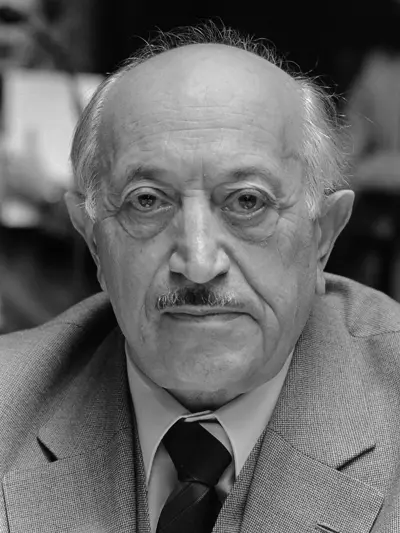
Simon Wiesenthal KBE was a Jewish Austrian Holocaust survivor, Nazi hunter, and writer. He studied architecture and was living in Lwów at the outbreak of World War II. He survived the Janowska concentration camp (late 1941 to September 1944), the Kraków-Płaszów concentration camp (September to October 1944), the Gross-Rosen concentration camp, a death march to Chemnitz, Buchenwald, and the Mauthausen-Gusen concentration camp (February to 5 May 1945).
