John Paul Jones Quotes
For me, if I have done my duty, the continued approbation of Congress and the Marine Committee will make me rich indeed, and far more than reward me for a life of service devoted from principles of philanthropy, to support the dignity of human nature.
Jones, John Paul. Letter to the Marine Committee. Life and Correspondence of John Paul Jones, edited by Robert Charles Sands, D. Fanshaw, 1830, p. 62.


Beaumarchais had provided the Americans with credit in the amount of ½ million French Livres. However, Beaumarchais served the French King Louis XVI as a spy and advisor on foreign affairs. The money had been secretly provided by the French government to help the American cause while still being able to officially deny to England that they were in any way involved in the rebellion. The American agent, Silas Dean, who arranged for the loan saw through the ruse. See {624186} and {624184}.


America had reached an agreement with Colombia to buy the Canal Zone to built an inter-ocean canal. There was great momentum in the US and much of the world for such a project. But the ever changing government of Colombia decided to reneg on the agreement and demanded more money. Roosevelt felt that the United States was being “held up” and so he supported a small insurgent group in Panama who declared Panama independence from Colombia. President Roosevelt sent an American warship to be sure that the Colombians could not land forces and put down the revolution. Roosevelt then negotiated a treaty for the Panama with the new revolutionary government of Panama. This divided American public opinion much of which thought that in effect Roosevelt, not liking the terms the Colombian owners of Panama insisted upon, just took Panama through the fiction of a revolution. TR thereafter always tried to explain his actions. See {589008} for additional material.

For his seditious activities he was sentenced to penal servitude for life. He escaped and came to America where he entered politics

This statement is perhaps the greatest and most eloquent description of the United States exceptionalism and its behavior in WWII. Such a statement could only come from a non-American.


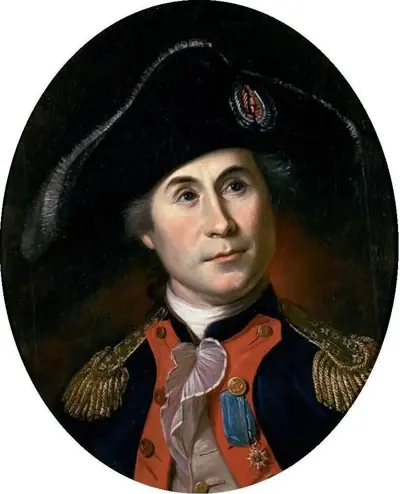
John Paul Jones was the United States' first well-known naval commander in the American Revolutionary War. He made many friends among U.S political elites (including John Hancock and Benjamin Franklin), as well as enemies (who accused him of piracy), and his actions in British waters during the Revolution earned him an international reputation which persists to this day. As such, he is sometimes referred to as the "Father of the American Navy" (a sobriquet he shares with John Barry and John Adams).
