Desmond Tutu Quotes
For goodness sake, will they hear, will white people hear what we are trying to say? Please, all we are asking you to do is to recognize that we are humans, too.
Desmond Tutu, Anglican Archbishop of South Africa, Nobel Peace Laureate, Chairman, South African Truth and Reconciliation Commission, quoted in New York Times (3 January 1985
Sourced by: Eigen's Political and Historical Quotations


In the 1930s African Americans who traveled were subject to countless humiliations whenever the sought hotels, rooming houses, restaurants and other accommodations. Gas stations would not allow them to use bathrooms and they were reduced to using open fields. Traveling and vacationing was, for Blacks, humiliating. Wikipedia: “Green reviewed hotels and restaurants that did business with African Americans during the time of Jim Crow laws and racial segregation in the United States. He printed 15,000 copies each year. In the 1930s, Green began his work by compiling data on stores in the New York area that accepted black travelers, and published his first guide in 1936. Similar guides had been published for Jewish travelers, who sometimes faced discrimination. Green's guide was so popular that he immediately began to expand its coverage the next year to other US destinations, adding hotel and restaurants as well.”


He was assassinated for his anti-apartheid views and speeches. Most clerics of the Dutch Reformed Church had traditionally supported the Afrikaner colonial view of Black inferiority and apartheid. Heyns was an exception and he was named by Nelson Mandela as a “martyr of his country.”


The Boers were lower class, uneducated, farmers from Holland who came to South Africa before the English did. They were at the bottom of the Dutch socioeconomic ladder. Unlike the English who were interest in establishing a trading colony, the Boers just wanted to own and farm the land and use blacks as slave or cheap labor. The Dutch Government and Trading companies lost interest in South Africa as there were much more profitable parts of the world, and they felt no obligation to the Boers whom they were glad to be rid of. So the Boers found themselves having to follow the British laws and rules of the British Colonial Office. Slavery was outlawed, and Blacks could be educated and become citizens under British law. They could own land, and contest the right of the Boers who had settled in some uninhabited land and some that was owned by Black tribes. The Blacks outnumbered the whites in general and the Boers, and there were educated Blacks who “outclassed” the still relatively uneducated Boers. So the Boers, fighting for their “way of life” set up their own area in Southern Africa and claimed independence. But Blacks claimed that it was their land and looked to the British to exercise English law. The Boer war ensued. Although the Boers lost the war, the bred at a much faster rate than the English, many of whom did not even have their families in South Africa. By the end of WWII, the Boer white majority controlled the government and kept the majority Blacks from voting and having full citizenship rights. They dominated Apartheid South Africa until the Black Revolutionists obtained control and although Black and white relations are better in South Africa than most countries, the extemeist Boers and most militant Blacks are in political, but not violent, conflict. Churchill and the British have always perceived themselves as being caught in the middle between the Boers and the Blacks.


The power structure of England and the English administrators of South Africa were strong advocates of racial equality at the beginning of the 19th century. They insisted on equal administration of law. However the Boer white population could think of nothing more absurd. In a sense the Boers were much like the Southern Whites at the same time. The South African government however could not enforce its equality policies in the rural area – the majority of South Africa at the time. When democracy and self rule came to South Africa, the racially moderating force of the English was minimized and the majority of South Africans wanted a racially segregated society. Apartheid resulted.


Contrast this view with that of Union General Ulysses S. Grant.
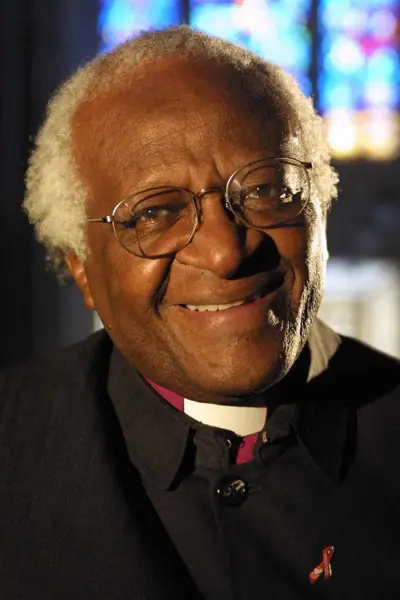
Desmond Mpilo Tutu OMSG CH GCStJ is a South African Anglican cleric and theologian, known for his work as an anti-apartheid and human rights activist. He was the Bishop of Johannesburg from 1985 to 1986 and then the Archbishop of Cape Town from 1986 to 1996, in both cases being the first black African to hold the position. Theologically, he sought to fuse ideas from black theology with African theology.
