Cesare Beccaria Quotes
For a punishment to be just it should consist of only such gradations of intensity as suffice to deter men from committing crimes.
Beccaria, Cesare. An Essay on Crimes and Punishments. Philip H. Nicklin, 1819, p. 94.


Wade was urging the Prince to abolish the Death by 1000 Cuts {641825} and simply rely on beheading the form of execution for “lesser” crimes. Note that the Prince’s fears and arguments parallel the same given by modern proponents of the Death Penalty—without it criminals would not be controlled and instability would ensue.


In China at the time criminal activities included most opposition to the government.

Mulcts were fines. This was the then common view of educated people regarding the criminal justice system and what we would consider today as barbarous punishments. Note the view that those who had money should pay fines for some crimes but those without money should have their bodies mutilated for the same crimes.

He was one of the longest serving District Attorneys in America, He also served the largest jurisdiction of a District Attorney. When he first was elected DA of Manhattan there were over 600 murders a year. When he retired, there were only about 60, a 90% reduction. Yet, his experience was that capital punishment was useless in deterring murder. He had many other techniques far more effective.

This has been the case in EVERY jurisdiction that has had capital punishment. Capital punishment does provide vengeance for victims, relatives and society. And in many societies execution is less expensive than prison for life. But it has never curtailed crime despite the example. In London, they used to have public executions as examples to inhibit crime. While the crowd was watching a pickpocket be hung, other pickpockets were relieving many spectators of their wallets and watches.


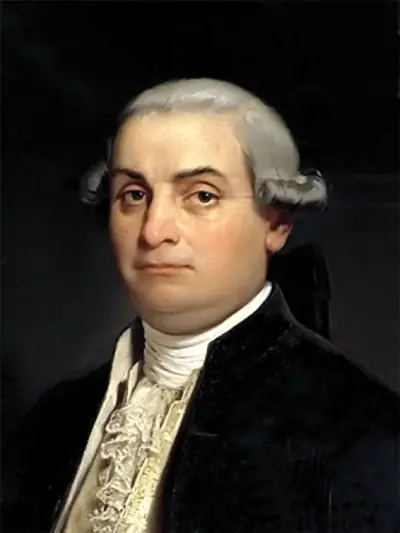
Cesare Bonesana di Beccaria, Marquis of Gualdrasco and Villareggio was an Italian criminologist, jurist, philosopher, and politician, who is widely considered one of the greatest thinkers of the Age of Enlightenment. He is well remembered for his treatise On Crimes and Punishments (1764), which condemned torture and the death penalty, and was a founding work in the field of penology and the Classical School of criminology. Beccaria is considered the father of modern criminal law and the father of criminal justice.
