Henry Louis Gates Jr. Quotes
First we have to recognize that the cause of poverty is both structural and behavioral. And the first thing about the behavior part is that we need a moral revolution within the African American community. Look - no white racist makes you get pregnant when you are a black teenager.
Gates, Henry Louis, Jr. The Two Nations of Black America. PBS Frontline, 1998.


Eldest son of Robert Walpole. Lord Dunmore, royal governor of Virginia, had issued a proclamation offering freedom to slaves willing to defend the Crown


In the era of slavery, Southerners had these stereotypic racist attitudes. Similarly in Reconstruction and the Jim Crow era. However, Helms is one of the few Southern politicians who overtly would state these hateful views when the rest of the South was becoming a “New South” with respect to race relations.

Kern has been censured for her discriminatory and insulting statements made in the legislatures. See {623312} & . {623311}. Using her warped logic, the children of well to do families would not study hard as their family would take care of them; Some do not and some do. It is the same with people of color and everyone else. This quotation shows that in a democracy, where legislators represent specific geographic areas, people who are uneducated, racist, homophobic, religiously bigoted and/or foolish can elect a representative who has some bizarre and/or hateful views. There have, in America, always been elected representatives whose views are out of the mainstream and embarrassing to most Americans. However in a free democracy freedom of speech and representation cannot be limited to sensible, constructive, logical or scientifically accurate content. Kern and others like her remind us all where education and public information access may be less than ideal.


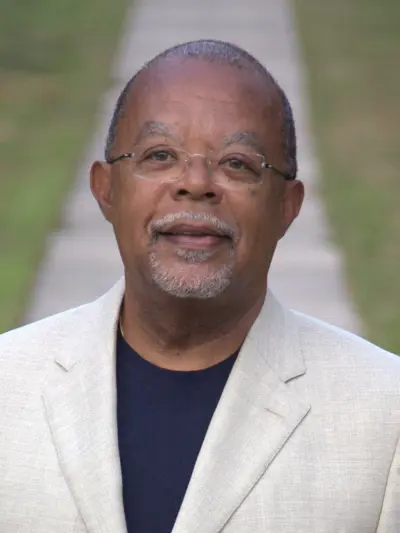
Henry Louis "Skip" Gates Jr. is an American literary critic, professor, historian, filmmaker, and public intellectual who serves as the Alphonse Fletcher University Professor and Director of the Hutchins Center for African and African American Research at Harvard University. He rediscovered the earliest African-American novels, long forgotten, and has published extensively on appreciating African-American literature as part of the Western canon.
