David Hume Quotes
Few enjoyments are given from the open and liberal hand of nature; but by art, labor and industry we can extract them in great abundance. Hence, the ideas of property become necessary in all civil society.
Hume, David. A Treatise of Human Nature. Edited by L. A. Selby-Bigge, Clarendon Press, 1896, p. 488.


Sealed under duress and later repudiated by the King with Papal assistance. This clause was particularly interesting in that almost all freedoms have expanded from the Magna Carta in modern democracies. However in this one there was an absolute direct prohibition against the King—the State—taking private property without the owners consent. In modern democracies the right is not as strong as the original. The state, if it needs the property, wood or whatever, and the owner refuses to give it or sell it to the state, the government can condemn the property but must pay the owner the fair market value of the property seized. As a practical matter, the kings of England paid little or no heed to this clause. One of the sources of conflict between the English Royal Navy and the American Colonists was the practice of Naval agents finding tall straight trees, good for the main mast of a ship, and marking it thereby prohibiting the property owner of cutting down that tree until the Crown sent a crew to fell the tree and take it for ship building. They paid no attention to Aticle 31 whatsoever.


50 years later a similar phrase was made famous be anarchist Pierre Joseph Proudhon.

This philosophical point of view is at odds with that of many Native Americans.

Paine, one of America’s founding fathers and the man most responsible for influencing Americans to revolt, is generally not given much attention in modern times. One of the main reasons was that his philosophy regarding land and land ownership is today considered socialist if not communist. Paine’s other views are mostly Apple pie American, but this is shocking to many Americans.

While generally true, Mises here again exaggerates his “proof” by selectively ignoring or being ignorant of counter-examples. The Roman Catholic Church is a classic counter-example where priests, monks, and others owned nothing as individuals, but produced some great science (eg Gregor Mendel), art (the illuminated texts of the middle ages), literature (St Thomas Aquinas, etc). The best counter example that was just evident in the last decade of Misis’ life is Communist Russia. Russian science was better than Fance and Germany and second only to the United States. The Russian ballet and orchestras were second to none. Great literature came out of the Soviet Union and the best of it complained about and attacked the Soviet system of the times. In general, Mises principle tended to be correct throughout history but not always as he dogmatically stated.


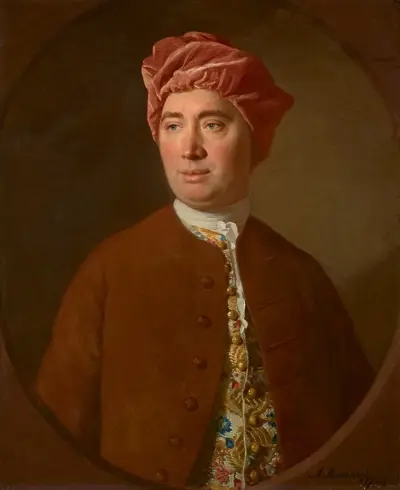
David Hume, Hume strove to create a naturalistic science of man that examined the psychological basis of human nature. Hume argued against the existence of innate ideas, positing that all human knowledge derives solely from experience. This places him with Francis Bacon, Thomas Hobbes, John Locke, and George Berkeley as a British Empiricist.
