John Wilson Quotes
Fetiches are set up to punish offenders in certain cases where there is an intention to make a law specially binding; this refers more particularly to crimes which cannot always be detected. A fetich is inaugurated, for example, to detect and punish certain kinds of theft; persons who are cognizant to such crimes, and who do not give information, are also liable to be punished by the fetich. The fetich is supposed to be able not only to detect all such transgressions, but has power, likewise, to punish the transgressor. How it exercises this knowledge, or by what means it brings sickness and death upon the offender, cannot, of course, be explained; but, as it is believed in, it is the most effectual restraint that can possibly be imposed upon evil-disposed persons.
John Wilson, 1809-1886., Missionary & Anthropologist, Secretary of the Board of Foreign Missions of the Presbyterian Church
Sourced by: Eigen's Political and Historical Quotations


This method of substance abuse prevention represents what scientists now call “environmental prevention” where instead of dealing with individual alcoholics the environment is altered to reduce the likelihood of developing fewer alcohol-related problems. Almost every state uses Locke’s principle and regulates the number of liquor outlets in any most areas. Those communities which have a very high density of bars and liquor stores tend to have more alcohol-related violence. The riots of the Watts area of Los Angeles in the late 20th century took place in one of the highest densities of liguor stores in the country.


A priest, friar or monk with this commission could and did, remove from the custody and control of the local judges, bailiffs and law enforcement officers clerics who had run afoul of the law. At the time the word “clerk” meant any churchman. The principle at the time was that the state could not judge or dispense justice or punishment to members of the church. Only the church could try and convict clerics and they did that persiant to cannon (religious) law. In theory, the bearer of this commission would take custody of an accused criminal who was a churchman, and bring him to the Bishop who would handle the case under Ecclesiastical Law. Often that meant, doing nothing or minor penitence for a crime that could even bring the death penalty under civil law. Historically there has been a major struggle in the West between the churches and civil governments that still goes on to this day in countries like Ireland. In America, the early 21st century saw the Roman Catholic bishops covering up crimes of sexual predation on the part of Priests. Many people were also outraged that the bishops did not report the Priests to the police, but this was unfortunately a throwback to this historical notion that the Church only can deal with the discipline and legal matters involving church personnel or property. Historically, reporting matters like this to civil authorities for handling is only about 200 years old, while the system illustrated by this quotation had been in place for about 1200 years before.


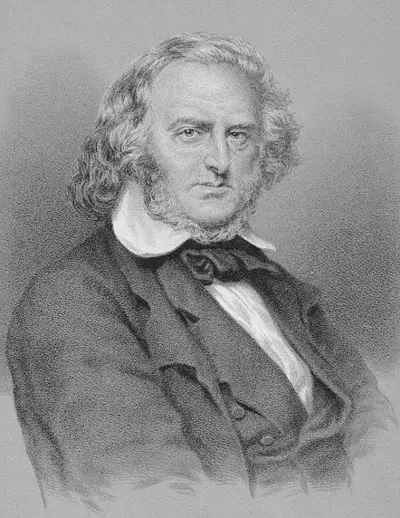
John Wilson of Elleray FRSE was a Scottish advocate, literary critic and author, the writer most frequently identified with the pseudonym Christopher North of Blackwood's Edinburgh Magazine.
