Paul A. Volcker Quotes
Fanny Mae was torn between its two duties: to make as much money as they could and to protect the mortgage market.
This is typical of almost all government and semi government agencies. Does a government agency buy for as low a price as possible or give all a fair chance to compete, do police stop crime at the cost of impinging on civil rights, in the aftermath of the 2008 meltdown, does the government seek justice and punish the banks who caused the problem or build up the financial system so that investors and capitalists will have confidence and bring the system back to normal. Government, churches, charities and other non profit organizations all have this conflict between two or more duties and desirable objectives. This is one of the reasons that many of the great corporate leaders have failed in working for the government—they have difficulty coping with ambiguity and conflict of objectives. A company can ruin a community by moving a factory or office to a less expensive location, but generally the negative consequences are not major factors. For a government agency to ruin a community to save a little money is a much different matter.
Paul A. Volcker, Chairman, Federal Reserve Board, Interview, PBS The Charlie Rose Show, March 18, 2008
Sourced by: Eigen's Political and Historical Quotations


This warning was a decade before the Meltdown of 2008, but was not heeded by any of the politicians. As a result a number of the companies that made all those risky decisions assumed that if something went terribly wrong the government would not let them fail. Unfortunately, they were right and the taxpayers spent billions to prevent companies from failing. After the meltdown all the politicians vowed to end the too big to fail concept, but while some improvements were made, the Congress could not come to agreement, and the markets and a number of companies think that they are still too big to fail. This is particularly true for Defense Contractors where the government has and probably will in the future, protect irresponsible companies from failure if they are the only company that makes needed weapons and other equipment.


Abd al-Rahman Ibn Mohammad. He is generally regarded to be the World’s first social scientist. The largest statue in Tunisia of not of a military leader of king, but of this social scientist. This economic adage is uttered the world over, but the first writing of it that we have found is Ibn Khaludun

Hamilton, then the Treasury Secretary, had proposed the creation of a national bank with the seemingly incredible notion of having it run by private individuals and not responsive to Congress. The experience of Europe and the individual states convinced Hamilton and some others that no government, monarchy or republic, could resist the temptation to print money rather than deal with basic economic problems. If in private hands, and least to protect their wealth, the bankers would not debase the national currency. Hamilton’s view actually prevailed with some Jacksonian adjustments and interruptions along the way. Today, the Federal Reserve Banks are to a great extent private. But neither Congress nor the President can control the money supply. There are some who object for just the reason that they feel that in a democracy all the levers of government should be under the control of the representatives of the people.

He was referring to Fannie Mae, the government-created. private mortage guarantee company. It was heavily regulated, and in general it met the regulatory requirements. However, the requirements were insufficient, and in the 2008 Meltdown and the Great Recession that followed, Fannie Mae itself was in such bad financial condition, that the Federal Government had bail them out or have the entire home mortgage industry fall apart.


Greenspan and some others assumed that the shareholders and the executives who ran the financial institutions had the same vested interests. But the executives had disconnected themselves from the fate of the shareholders, by having Golden Parachutes to protect the executives even if the business failed and they were fired. And they got their bonuses immediately so by the time the authorities and the shareholders discovered that the profits the bonuses were paid for were illusory, the bonus money was safely stored in a secret offshore bank. But if things went wrong, there was always the play of getting a government bailout which would keep the executives getting their huge bonuses and keep the shareholders from losing their money as the taxpayers covered most of the losses.


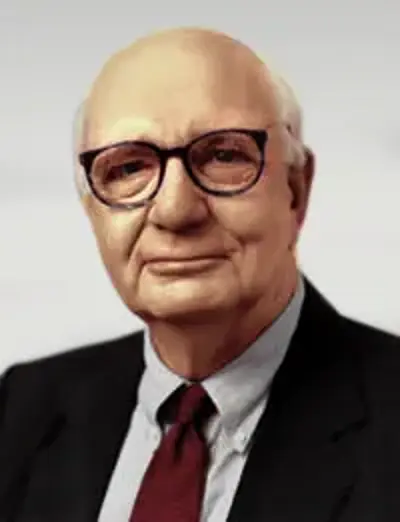
Paul Adolph Volcker Jr. was an American economist. He served two terms as the 12th Chair of the Federal Reserve under U.S. presidents Jimmy Carter and Ronald Reagan from August 1979 to August 1987. He is widely credited with having ended the high levels of inflation seen in the United States during the 1970s and early 1980s. He was the chairman of the Economic Recovery Advisory Board under President Barack Obama from February 2009 until January 2011.
