Ted Kaufman Quotes
You cannot have fairness unless you have transparency…We don’t know that is going on inside those boxes … we could have a meltdown [in the entire economy].
Edward E. Kaufman, U. S. Senator (Democrat, DE), CBS 60 Minutes, August 11, 2013
Sourced by: Eigen's Political and Historical Quotations


See Louis D. Brandeis for an earlier phraseology.
_0_thumbnail_47x47.jpg "Statue of Robert Hall in Leicester.")
For many people the implication of this quotation is that there should be no government secrets withheld from the citizens who have the right to examine. Others argue that government may have temporary secrets to protect against foreign enemies for example, but that these must be declassified very promptly so that the citizens can examine the actions of their government in time to replace the government if they are not satisfied. Almost all government officials tend to reject the first implication out of hand, and grudgingly accept the second with their discretion controlling when declassification should take place. The problem of America is twofold. There is much over-classification (material kept secret that should not be at all), and the time till declassification is long in general and truly absurd in many cases. For example, there are documents from WWII that by 2013 had still not been declassified. See {591444}, {641317}, and {589105} for exemplar views. William Jennings Bryan introduced this principle into the American political dialogue. See {641027}.

He was referring to Fannie Mae, the government-created. private mortage guarantee company. It was heavily regulated, and in general it met the regulatory requirements. However, the requirements were insufficient, and in the 2008 Meltdown and the Great Recession that followed, Fannie Mae itself was in such bad financial condition, that the Federal Government had bail them out or have the entire home mortgage industry fall apart.
He believes that the best way to achieve that is to achieve that is to increased of eliminate campaign contribution limits. Bopp however is at odds with many leading Republicans over transparency which he supports. Others want secret and anonymous contributions.

The issue was still not decided by the beginning of the 21st Century except that a certain amount of public disclosure was required if the company raised funds by selling stock to the public, but there were some giant corporations that were private and exercised huge power and influence and yet whose operations were secret.


At the time there was no Secrecy & Classification System nor any laws enforcing secrecy or confidentiality. However there was no freedom of information laws of expectations even on the part of journalists. This was the first Freedom of Information policy of the American government. Some politicians were more open than others but there was no national, governmental before this. There were however leakers and whistleblowers though the terms were not in use. Note that Roosevelt herein created the first whistle blower protection—himself.
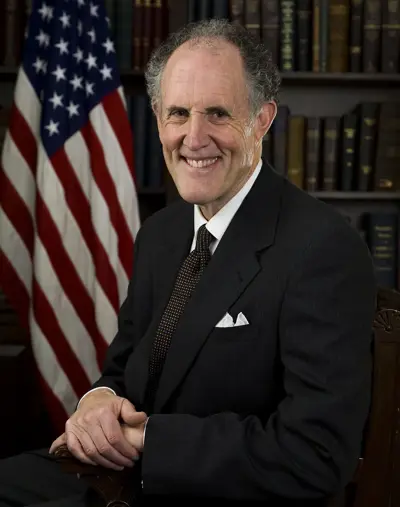
Edward Emmett Kaufman is an American politician and former businessman who served as a United States senator from Delaware from 2009 to 2010. He chaired the Congressional Oversight Panel for the Oversight of the Troubled Asset Relief Program; he was the second and final person to hold the position, succeeding then-law-school-professor Elizabeth Warren. Kaufman is a member of the Democratic Party.
