Edmund Burke Quotes
Falsehood is a perennial spring.

After the Constitution had been ratified, there was a concerted attempt on the part of the Southern Slave States to minimize the importance of the Declaration of Independence. They feared that the equality principle in the Declaration should be seen by Americans as desirable policy which clearly meant slavery was untenable. There were three approaches all used by the Southerners. First, they tried to make it clear that the Declaration had no weight in American law or moral principles as it was superseded by the Constitution. Second, they claimed that it could only have applied to white men as Black males were not really men. Third, that the statement was patently false. This quotation illustrates the latter.


See Ben Franklin for an earlier similar sentiment {465143}.


This quote comes from Goebbels' text "Churchill's Lie Factory" and is believed to be the paraphrased source of the commonly misattributed quote in {583627}.

This sentiment was apparently first expressed by the English Calvinist Minister, Charles Spurgeon, 1834-1892.


He was asked why the War Office maintained three sets of figures: 1st Earl of Oxford

MacArthur had been the Commander of our Military Forces in Korea. He had a huge ego, and he wanted to cross the border and attack China since Chinese Troops were aiding the North Vietnamese. He had previously assured the Joint Chiefs of Staff and the President that the Chinese would not send troops into Korea, but he was then wrong. And when they had attacked, they had erased the territorial gains that MacArthur had previously gained. The Joint Chief’s of Staff, the Secretary of Defense and the Secretary of State had decided upon a strategy which this time did not follow MacArthur’s strategic advice. The President approved the strategy, but MacArthur spoke and acted contrary. The President met with MacArthur and reiterated the strategy that the President approved. But MacArthur did not follow the orders of the Joint Chiefs. At the time, he and Eisenhower were America’s two most famous military leaders, and of the two MacArthur was senior and thought that he should be President. After he was fired, MacArthur addressed a Joint Session of Congress and gave his "Old Soldiers Never Die" speech which was his first active step towards the Presidency. It was a very sentimental speech with little content and nothing about why he had disobeyed orders. He was totally shocked when it was Eisenhower who was selected to run for President and not him.

The claims made by some Republicans were so absurd and extreme that the whole Party was tarred. Some even claimed that the legislation required “Death Panels” which would decide on which elderly people would be treated and which should be abandoned to no die with no treatment when there was no such thing even proposed by anyone, much less passed in the legislation.


Sinclair was running for the governorship of California and initial polls showed that he was way ahead. Major Conservatives from the country over contributed money to defeat him—more money at the time than had ever been raised even for a Presidential campaign. The Conservatives hired the first political consultants who would advise on an American Campaign throughs a corporation they established Campaigns Inc. The consultants began creating posters and pamphlets many of which were total fabrications attacking Sinclair and then went through his novels that he had written and took quotes from character dialogues in his novels including some of the villain characters who said vile things. They attributed all these terrible quotation to Sinclair, put them into printed pamphlets and distributed them all over the state. Sinclair lost making the assumption that few people would believe the lies that were being issued from Campaign Inc. After that race, political consultants began to work in many campaigns, and with that came more negative campaigning, attacks and more falsehood and lies entered the American political scene.
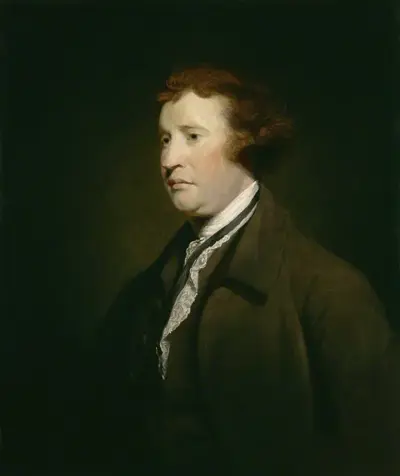
Edmund Burke was an Irish statesman, economist, and philosopher. Born in Dublin, Burke served as a member of parliament (MP) between 1766 and 1794 in the House of Commons of Great Britain with the Whig Party after moving to London in 1750.
