John Paul Stevens Quotes
Executive detention of subversive citizens, like detention of enemy soldiers to keep them off the battlefield, may sometimes be justified to prevent persons from launching or becoming missiles of destruction. It may not, however, be justified by the naked interest in using unlawful procedures to extract information. Incommunicado detention for months on end is such a procedure. Whether the information so procured is more or less reliable than that acquired by more extreme forms of torture is of no consequence. For if this Nation is to remain true to the ideals symbolized by its flag, it must not wield the tools of tyrants even to resist an assault by the forces of tyranny.
John Paul Stevens, U. S. Supreme Court Justice, Dissent, 2004
Sourced by: Eigen's Political and Historical Quotations


One aspect of the “gloves coming off” was the CIA engaging in illegal activities such as torture, as well as the legal activities which were so effective at the beginning of the Afghanistan War and the use of drones to kill terrorist leaders.

This quotation is typical of many constitutions in the sense that one part of the Constitution guarantees political freedom for all citizens and another part then makes so many exceptions that there are no guaranteed rights other than those the government wishes to give at any point of time. In this particular Constitution Article 10 does both, one right after the other. So Clause 1 gives the rights and Clause 2 explains how they can be taken away. For example, in 2008 university students were not allowed to join political parties.

Rendition is the process whereby one country sends a prisoner to another country for interrogation under the theory that the second country can use methods that would be illegal in the first country. Usually torture is involved.

Porfirio Diaz - the longtime dictator of Mexico stole the election of 1910 and had his opponent Francisco Madero arrested and imprisoned. Madero got out, crossed the border to San Antonio, and issued this declaration which started the Mexican Revolution. See {613620} for the statement that declared the Revolution.


During the 2006 War on Terror, the George W. Bush Administration established secret prisons in friendly countries where suspected terrorists could be housed and questioned without regard to the American laws and regulations—or even Presidential directives about torture. The prisons were on the soil and under the jurisdiction of foreign countries whose laws were not as respectful of human rights and the rule of law as ours. Therefore the administration could deny that the U. S. was responsible for what occurred even though we secretly transported the suspects to the secret prisons and American agents participated in their “interrogation.”


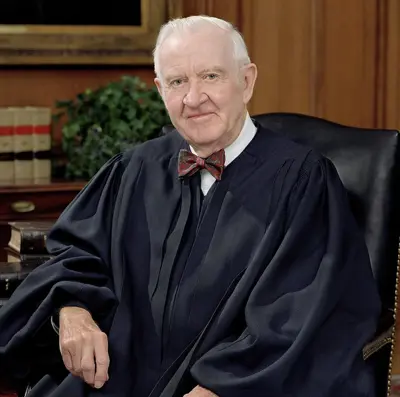
John Paul Stevens was an American lawyer and jurist who served as an associate justice of the United States Supreme Court from 1975 until his voluntary retirement in 2010. At the time of his retirement, he was the second-oldest-serving justice in the history of the court and the third-longest-serving justice. At the time of his death, he was the longest lived Supreme Court justice ever. His long tenure saw him write for the court on most issues of American law, including civil liberties, death penalty, government action and intellectual property. In cases involving presidents of the United States, he wrote for the court that they were to be held accountable under American law. A registered Republican when appointed who throughout his life identified as a conservative, Stevens was considered to have been on the liberal side of the court at the time of his retirement.
