Francisco I. Madero Quotes
The legislative and judicial powers are completely subordinated to the executive; the division of powers, the sovereignty of the States, the liberty of the common councils, and the rights of the citizens exist only in writing in our great charter; but, as a fact, it may almost be said that martial law constantly exists in Mexico
Porfirio Diaz - the longtime dictator of Mexico stole the election of 1910 and had his opponent Francisco Madero arrested and imprisoned. Madero got out, crossed the border to San Antonio, and issued this declaration which started the Mexican Revolution. See {613620} for the statement that declared the Revolution.
Francisco Madero, *, Mexican Leader & President, Declaration: The Plan of San Luis Potosi, November 20, 1910
Sourced by: Eigen's Political and Historical Quotations

Porfirio Diaz - the longtime dictator of Mexico stole the election of 1910 and had his opponent Francisco Madero arrested and imprisoned. Madero got out, crossed the border to San Antonio, and issued this declaration which started the Mexican Revolution.


Iturbide, known also as Agustin I, was the first Emperor of Mexico who was executed by a firing squad.

Contrast this quotation with {585205} and {585206}. When younger, he was an ardent democrat and human rights advocate. Once in power however, he advocated and did all the totalitarian things that he used to rail about.


While a Congressman under the Truman administration, Johnson was critical of federal measures to enforce civil rights.


The call for individual liberty and the right of personal property by clergy is surprising to many. This Cahier was the consensus of the Clergy of Blois in 1789. There were cahiers of several provinces of France—some by the clergy, some by the nobles. What is fascinating is the emergence of many of the pre-Revolutionary French concepts. The example of the American revolution and its principles was known throughout the educated classes of France.

It is ironic that Pakistan, the creation of Jinnah’s efforts, has to a great extent adopted Sharia (Islamic Law) resulting in severe curtailment of freedom of speech and thought. Professors languish in jail for not teaching the history of Muhammed in the orthodox way, people are sentenced to death for what the local mullahs regard as blasphemy—results which from Jinnah’s point of view were terrible.
This quotation is typical of many constitutions in the sense that one part of the Constitution guarantees political freedom for all citizens and another part then makes so many exceptions that there are no guaranteed rights other than those the government wishes to give at any point of time. In this particular Constitution Article 10 does both, one right after the other. So Clause 1 gives the rights and Clause 2 explains how they can be taken away. For example, in 2008 university students were not allowed to join political parties.


In the aftermath of 9-11, a few government agencies violated the law and civil rights of a number of “Muslims” and/or “Middle Eastern looking” individuals and held them incommunicado with no charges and no warrants. The rationale of those agencies is that they “could not take a chance as lives were at stake. In most major wars in America, there has been an “overreaction” by some officials.

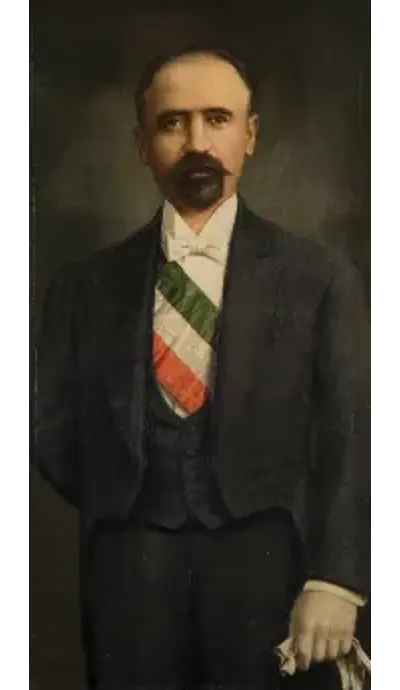
- Born: October 30, 1873
- Died: February 22, 1913
- Nationality: Mexican
- Profession: Statesman
Francisco Ignacio Madero González was a Mexican revolutionary, writer and statesman who served as the 37th president of Mexico from 1911 until shortly before his assassination in 1913. A wealthy landowner, he was nonetheless an advocate for social justice and democracy. Madero was notable for challenging long-time President Porfirio Díaz for the presidency in 1910 and being instrumental in sparking the Mexican Revolution.
