Eleanor Roosevelt Quotes
… every new form of government, fascist, communist or our own democracy had originally for its purpose the making of a world in which people could be happy and content.
Eleanor Roosevelt, 1884-1962 First Lady (Franklin Delano Roosevelt), U. S. Delegate to the United Nations, Column, My Day, April 27, 1937
Sourced by: Eigen's Political and Historical Quotations


This quotation is very interesting in that many of Mrs. Roosevelt’s detractors constantly accused her of being a communist. They obviously had not read this column of any of the many where she shows antipathy to Communism.

Many of the communist governments of the world described themselves as “democratic socialism.”


Kishi was an ultra conservative who was one of the politicians who signed the Declaration of War against the U. S. and then served in the Japanese War Cabinet and was the Minister of Commerce and Industry. In the latter post he presided over and made policies about the utilization of slave labor and brutal and illegal treatment of prisoners of war. After Japan’s surrender he was jailed as a “Class A” war crimes suspect along with several other cabinet ministers. In 1948, General MacArthur decided not to prosecute the Cabinet Ministers as he had decided not to prosecute the Emperor Hirohito. His brother was the secretary to the prime minister’s cabinet who had arranged a job for him. However, all the people in government were now building a democratic government. Being a right wing pro military, pro empire politician was no longer feasible and he discovered all his ex-colleagues who hated democracy before were now extolling its virtues. He went with the flow, and reorganized his political constituency, and gained control of the Diet, but now they were all democrats. Then he became prime minister. He was an ardent anti-communist and the Cold War was raging so his previous right wing dictatorial, pro war positions and his war crimes were overlooked by MacArthur and the allies.


At the time English democracy was still suspect especially among the aristocracy.


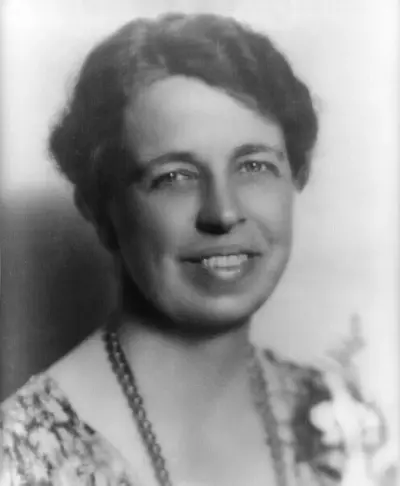
Anna Eleanor Roosevelt was an American political figure, diplomat and activist. She served as the First Lady of the United States from March 4, 1933, to April 12, 1945, during her husband President Franklin D. Roosevelt's four terms in office, making her the longest-serving First Lady of the United States. Roosevelt served as United States Delegate to the United Nations General Assembly from 1945 to 1952. President Harry S. Truman later called her the "First Lady of the World" in tribute to her human rights achievements.
