Edmund Ruffin Quotes
Every laborer, when possessing most strength and skill, and even when also exhibiting industry and general worth of character, and however healthy, and entirely free from family or other encumbrances, still is regarded by every poor-rate payer and by every parish official as a prospective pauper; or one who, though not yet chargeable to the parish, will surely become so thereafter, when his health fails, or old age approaches, if not much sooner. The most independent laborer regards himself in the same light of a pauper in a state of transition.
Ruffin is more widely known as the man who fired the first shot of the Civil War.
Edmund Ruffin, 1794-1865, Virginia State Senator, Slavery And Free Labor, Described And Compared, ~1862
Sourced by: Eigen's Political and Historical Quotations


The founder was Charles E. Coughlin, 1891-1979, a demagogic Catholic Priest who drafted the principles and invited others to join him. Hundreds of thousands did in this organization which began in idealism, and ended in scandal and hate mongering, so much so that Father Coughlin was ordered off the radio and out of politics by the Catholic Church. The National Union in 1936 had morphed into the Union Party which ran Presidential candidates in the 1936 election.


The argument here is that since the poor working class wages are so low, that they cannot save for an emergency, therefore the society must provide for welfare for those who might otherwise starve.


This incredible quotation was actually typical of many of the extremist right wing views that Angle had. Very few conservatives who may have problems with the unemployment insurance system believe that the benefits are so generous that anyone would possibly be spoiled from the benefit. An unemployed family head, who may have been middle class, if he or she lost a job and while looking for another is supported by unemployment in almost all cases will be below the poverty level. This is hardly a standard of living that would spoil anyone. The voters of Nevada certainly thought so as they defeated Angle at the polls.


This was written in the early years of the Great Depression. Over 25 percent of Americans were out of world. The stock market had crashed and many banks failed wiping out family savings where there was any. Social Security, Bank and Stock Market Regulations were not yet passed. The New Deal government was just starting creating jobs, but there was great concern that the capitalistic system had failed. Thomas and other critics were right that the U. S. Government had not before used its machinery for “ease and security of living”; they called for the adoption of state socialism. President Roosevelt however instead reformed American capitalism by adding substantial regulation, provided direct relief to the unemployed poor, stimulated the economy, created Social Security, Federal Deposit Bank Insurance, unemployment insurance and initiated massive public works programs. It took almost a decade but American Capitalism was saved and transformed to the greatest industrial output and standard of living increase the world had known. It was not until 2008 that the capitalistic American economy melted down again. Regulation of corporations had diminished. The banks failed and had to be bailed out again but as the result of Social Security, Unemployment Insurance and other programs there was some cushioning of the effect of the Great Recession. The middle and lower class insecurity was back along with the wealthy taking a much larger proportion of the national wealth. The big difference was that few called for an end to capitalism and the political debate was on how best to fix the weaknesses of capitalism. Even most socialists around the world had built their Social Democracies around a capitalistic economic structure.

_0_thumbnail_47x47.jpg "Statue of Robert Hall in Leicester.")


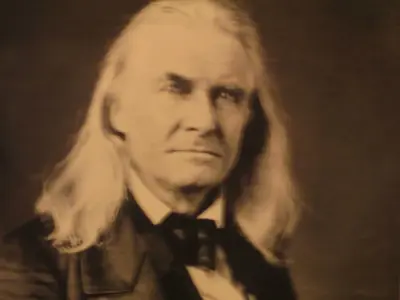
Edmund Ruffin, III was a wealthy Virginia planter and slaveholder who served in the Virginia Senate from 1823 to 1827. In the last three decades before the American Civil War, his pro-slavery writings received more attention than his agricultural work. Ruffin staunchly advocated states' rights and slavery, arguing for secession years before the Civil War, and became a political activist with the so-called Fire-Eaters. Ruffin is given credit for "firing the first shot of the war" at the Battle of Fort Sumter in April 1861 and fought as a Confederate soldier despite his advanced age. When the war ended in Southern defeat in 1865, he committed suicide rather than submit to "Yankee rule."
