John Stuart Mill Quotes
Every established fact which is too bad to admit of any other defence is always presented to us as an injunction of religion.
Mill, John Stuart. The Subjection of Women. Longmans, Green, Reader, and Dyer, 1869, p. 56.


This is an important quotation for several reasons. First, it demonstrates the extreme diversity of religion in America. To Swaggart, Evolution is a “Satanic Theory”. However, to most American religious leaders, Evolution, per se, is not problematic. The Roman Catholic Church has no trouble with Evolution; Catholic Universities teach Evolution as a basic part of their science curricula. Jews have no theological problems with Evolution. None of the main-line Protestant Churches have any theological opposition to Evolution per se. Yet there are other Protestant denominations who find that Evolution is in contradiction to a literal interpretation of the Bible and hence do not accept it. Second, it shows the extreme level of vituperation and disrespect that is given differing points of view by some of the extreme fundamentalists who do not have the traditional American religious tolerance for differing belief structures. Here Swaggart accuses the hundreds of millions of Catholic, Protestant, Jewish, Buddhist and other clerics and laypeople who see Evolution as a well-established explanation of much of science, of being not only atheists but atheists in league with the Devil. A third factor is that this quotation is an example of a Minister telling people what is or is not science and scientifically demonstrated. If a scientist without any religious training of study were ever to render judgments on theology, most of us would laugh and see it as ridiculous. However when a cleric like Swaggert, untutored and ignorant of even basic science, makes scientific pronouncements, he (and many other fundamentalists) find that reasonable.


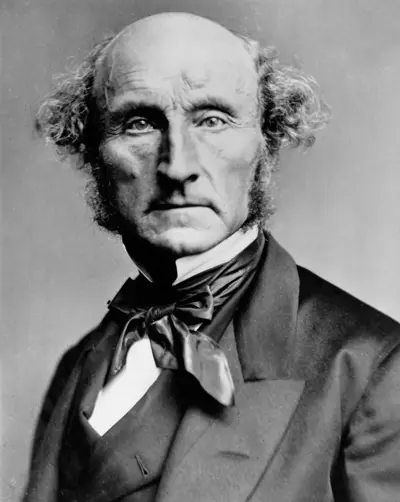
John Stuart Mill, usually cited as J. S. Mill, was an English philosopher, political economist, Member of Parliament, and civil servant. One of the most influential thinkers in the history of classical liberalism, he contributed widely to social theory, political theory, and political economy. Dubbed "the most influential English-speaking philosopher of the nineteenth century", he conceived of liberty as justifying the freedom of the individual in opposition to unlimited state and social control.
