Joseph de Maistre Quotes
Every country has the government it deserves.
de Maistre, Joseph. Lettres et Opuscules Inédits du Comte Joseph de Maistre, vol. 1, A. Vaton, 1851, p. 215.


Coolidge had no involvement in politics after his Presidency. He was never consulted by his successor and never resented that fact.


The Iraqi Prime Minister was a Shiite autocrat who had a winner take all approach to government and other than putting token Sunnis and Kurds in the Cabinet ran a very discriminatory government and could muster no loyalty with Kurds and Shiites.


The only soldier ever so honored. At the beginning of WWII, President Roosevelt and Churchill wanted the U. S. Army to invade German and Italian North Africa. Marshall, General Eisenhower, and all the other military men, advised that while it was possible, it would be a diversion from the strategic objective of invading Europe. None the less FDR ordered the invasion. The effect on the American people was wonderful, It showed that the Germans were not invincible, increased enlistment and morale at home, and developed more popular support for the war. Later, Marshall learned much about Democratic leadership and he, himself became a very effective government leader, and began to appreciate FDR’s approach but with a little cynicism about democracy.


She had not been able to get some of questions answered about the then current policy of holding suspected undocumented immigrants with a criminal record in detention until deportation. The Immigration and Naturalization Service, in response to the Sequester law was reducing costs by using other forms of monitoring for suspects with minor criminal records. Instead of writing the Secretary—an Arizona ex Governor herself—or the President—and waiting a reasonable time for a response, she reached this strange conclusion the following day. An immigration basher, she rarely passed up an opportunity to make a public dramatic statement bashing the immigration policies and practices of America.
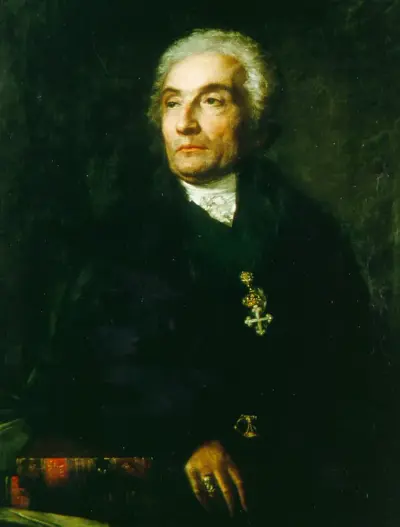
Joseph-Marie, comte de Maistre was a Savoyard philosopher, writer, lawyer and diplomat who advocated social hierarchy and monarchy in the period immediately following the French Revolution. Despite his close personal and intellectual ties with France, Maistre was throughout his life a subject of the Kingdom of Sardinia, which he served as a member of the Savoy Senate (1787–1792), ambassador to Russia (1803–1817) and minister of state to the court in Turin (1817–1821).
