James Baldwin Quotes
Education is indoctrination if you're white - subjugation if you're black.
Baldwin, James. No Name in the Street. Dial Press, 1972.


This quote illustrates the Southern segregationist view in the Jim Crow South.


Incredibly enough, after the Civil War and emancipation, most Virginia leaders opposed any form of rights for Blacks with one of the major reasons being that they were ignorant and uneducated. It was actually a crime to teach even a free Black to read.

A Southern Republican congressman with a voting record that was against minority interest, for the first time in American, interrupted and insulted the President of the United States in the midst of an invited Presidential Address to Congress given by Barack Obama, calling him a liar. Carter, himself a Southerner, recognized the motivation.


Vladimir Lenin. In their quest for world revolution, the Russian Communists had more problems with arguments in the United States whose reforms and economy had produced a very high standard of living. They knew that to effect a revolution, they had to reach the middle class and the intellectuals. They had little economically to attack America with but they were able to attack the United States morally. Even though segregation was legal in America at that time, many Americans thought it immoral. Most of the rest of the world did also. So that was one of the attack points. Since the communists opposed U. S. racial segregation, many Southern segregationists used a perverted logic and accused everyone who opposed segregation of being a communist. In addition to racial segregation, the Communists attacked other forms of discrimination such as anti-Catholic, anti-Asian, and anti-Semitic (See {638737} ) behavior.


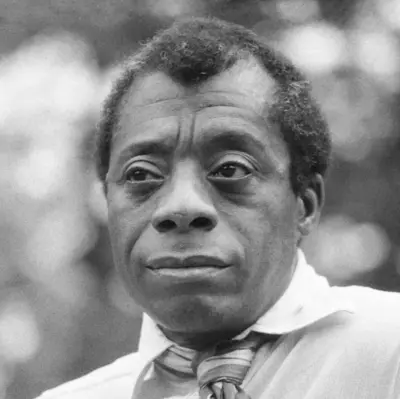
James Arthur Baldwin (August 2, 1924 – December 1, 1987) was an American writer. He garnered acclaim for his work across several mediums, including essays, novels, plays, and poems. His first novel, Go Tell It on the Mountain, was published in 1953; decades later, Time magazine included the novel on its list of the 100 best English-language novels released from 1923 to 2005. His first essay collection, Notes of a Native Son, was published in 1955.
