Victor Hugo Quotes
Ecclesiastes names thee Almighty, the Maccabees name thee Creator, the Epistle to the Ephesians names thee Liberty, Baruch names thee Immensity, the Psalms name thee Wisdom and Truth, John names thee Light, the Book of Kings names thee Lord, Exodus names thee Providence, Leviticus Sanctity, Esdras Justice, creation names thee God, man names thee Father; but Solomon names thee Compassion, which is the most beautiful of all thy names.
Hugo, Victor. Les Misérables. Translated by Charles E. Wilbour, Carleton, 1862, p. 41.


At the time, it was very difficult for people who had been taught all their lives that God was directly responsible for the creation to accept the notion of evolution. At the time, there was not the overwhelming evidence proving Darwin’s theory that we have today. Nor did theologians realize that evolution and Darwinism were not inconsistent with the concept of a creator and supreme being. Nonetheless, there are still those who, like Agassiz, reject evolution and insist that the Biblical version of creation is literally true. See {586990}. Then there are people who have come up with the concept of Intelligent Design which originated with Agassiz though he never called it that. Most religious people today, in contrast, see no conflict in natural selection as described by Darwin and later proven, and the concept of God. They see the Biblical creation as metaphorical and natural selection as the product of an omniscient supreme being.


Abraham Lincoln used this quotation when referring to the cost to the Southerners of the Civil War. See Quotation 644949.
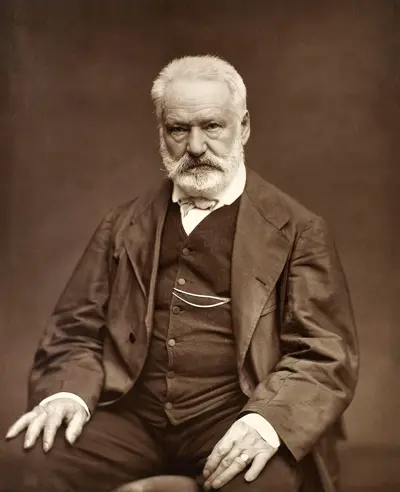
Victor-Marie Hugo was a French poet, novelist, and dramatist of the Romantic movement. During a literary career that spanned more than sixty years, he wrote abundantly in an exceptional variety of genres: lyrics, satires, epics, philosophical poems, epigrams, novels, history, critical essays, political speeches, funeral orations, diaries, letters public and private, as well as dramas in verse and prose.
