Boris Pasternak Quotes
What for centuries raised man above the beast is not the cudgel but the irresistible power of unarmed truth.
Pasternak, Boris. Doctor Zhivago. Translated by Max Hayward and Manya Harari, Pantheon Books, 1958, p. 42.

Prevented by the Military from ever taking office. Despite complete military control of the media, she was ovefwhelming elected as President of the nation. However, the military resfused to allow her to fucntion in the office and kept her under house arrest for years.


This is an amazing speech which illustrated the best of the development and growth of Islam. Note that: The ruler who has just been given ALL secular AND religious power admits candidly that he may not be the best qualified. This would not happen for over another 1000 years and even today is very rare in any society. In addition, he invites the citizens to correct him when he is wrong. Later, Calihs would, like the Christian kings and popes claim infallibiity and kill any who suggested otherwise. And daring to correct the ruler was capital offence for most of history and is even dangerous in some Muslim countries today. Last and perhaps most amazing, the new Caliph called for an affirmative leveling of the inequality of rights and power and announces it asa one of his major responsiblities. It is this kind of vision so unheard of at the time which shows us why so many flocked to Islam at the time. From a fairness, human rights, and accoutabiity of the ruler point of view Islam was the most modern of the religions then. Tragically, other forces shaped Islam for the next 1500 years and most Muslim countries become the least modern and its rulers are least accountable to the citizenry with none of the other rights and concept of fairness that Abu Bakr and other early Islamic leaders brought.


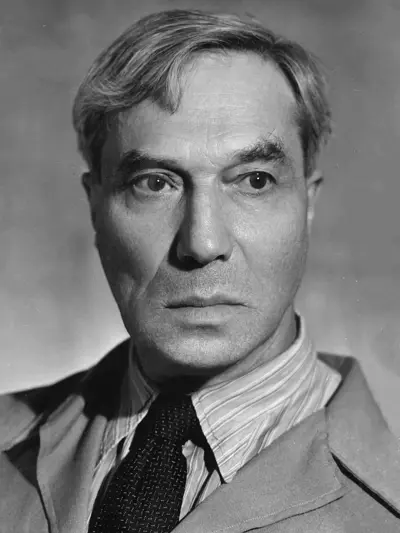
Boris Leonidovich Pasternak was a Russian poet, novelist, and literary translator. Composed in 1917, Pasternak's first book of poems, My Sister, Life, was published in Berlin in 1922 and soon became an important collection in the Russian language. Pasternak's translations of stage plays by Goethe, Schiller, Calderón de la Barca and Shakespeare remain very popular with Russian audiences.
