Henry II Quotes
Each person will give in charity one tenth of his rents and movable goods for the taking of the land of Jerusalem; except for the arms, horses, and clothing of knights, and likewise for the horses, books, clothing, and vestments, and church furniture of the clergy, and except for precious stones belonging to the clergy or the laity.
Henry II, 1133-1189, King of England, Wealth Tax Edict to finance the invasion of Jerusalem in the Crusades, 1188
Sourced by: Eigen's Political and Historical Quotations

The Papacy was at one of it’s lowest points. Two men, Clement and Urban, both claimed the Papacy and each had raised an army to fight the other. Each was promising indulgences to those who would fight, and in a modality similar to the Muslim terrorists of the 21st century, the soldiers were promised ascendancy to Heaven if they fell in battle for such a holy cause. The armies of the popes marched under the cross as their banner, and Wycliffe found that obscene and actually wrote a treatise saying so. See {618087}.


At the beginning of the First World War the senator called for surplus profits taxes on business to finance the war effort. President Wilson preferred bond financing and the business community castigated the Senator for not supporting the President's position. Later, when Wilson adopted the senator's view and called for additional taxes:

He ordered his troops to attack the clerics first, and then they moved against the soldiers. Whenever there have been military conflicts with theocracies or cultures where religious leaders had a great deal of control or influence, the dilemma has always been whether to exempt the clerics from military attack. In modern times this has been a central problem in the War on Terror, the Iraq War, and the Israeli-Palestinian conflict. In King Ethelfrid’s view “assailing us with their curses” is sufficient to make them a combatant and further, they should be the first military target because they are motivating the regular troops.

Gregory the Great. “Emoluments” included the income from all lands and other church property, gifts and tithes, and income of any sort. This formula characterized the division of resources for the better part of Christian history. By today’s standard, the proportion for these Bishops (there were those who chose poverty) and his household seems astoundingly high—his income and sustenance was the equal of all the priests in the bishopric. It illustrates the affluence of the bishops who were major forces in their territories. One of the rationales for such an affluent bishop (the assets were not all personal but he had control of them) was that he should be at least the equal of any in the area including kings and nobles for he was to have as much influence as they. It is difficult today to look at modern bishops and realize how their role, power, relative wealth, and influence has changed. Bishops had their own armies, judiciary, accountants, attorneys and were a government unto themselves.


For many religions and ethical systems, it is better to have personal contact with the recipient of charity than to give money.

This was quite unusual at the time when Kings were more interested in buying the loyalty and support of the rich and powerful nobles.
Starting with the Crusades, the Popes began giving indulgences to those who would die in battle fighting for a holy cause. The Papacy was then at one of it’s lowest points. Two men, Clement and Urban, both claimed the Papacy and each had raised an army to fight the other. Each was promising indulgences to those who would fight, and in a modality similar to the Muslim terrorists of the 21st century, the soldiers were promised ascendancy to Heaven if the fell in battle for such a holy cause. Wycliffe, in a wonderfully original notion, proposed that the people who live in peace be granted the indulgences. See {618086}.


The professor did not agree with these reasons and took the position that England was foolish in their use of military force. However, in America we rarely hear the English side of the dispute that led to war between England and her American colonies.


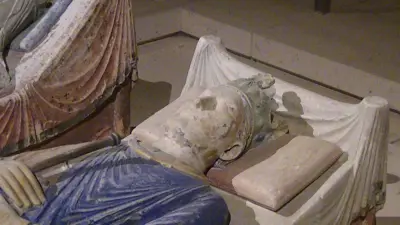
Henry II, also known as Henry Curtmantle (French: Court-manteau), Henry FitzEmpress or Henry Plantagenet, was King of England from 1154 until his death in 1189. He was the first king of the House of Plantagenet. King Louis VII of France made him Duke of Normandy in 1150. Henry became Count of Anjou and Maine upon the death of his father, Count Geoffrey V, in 1151. His marriage in 1152 to Eleanor of Aquitaine, whose marriage to Louis VII had recently been annulled, made him Duke of Aquitaine. He became Count of Nantes by treaty in 1185. Before he was 40 he controlled England, large parts of Wales, the eastern half of Ireland and the western half of France; an area that was later called the Angevin Empire. At various times, Henry also partially controlled Scotland, Wales and the Duchy of Brittany.
