Avicenna Quotes
Disease is an abnormal state of the body which primarily and independently produces a disturbance in the normal functions of the body. It may be an abnormality of temperament or form (structure). Symptom is a manifestation of some abnormal state in the body. It may be harmful as a colic pain or harmless as the flushing of cheeks in peripneumonia.
Avicenna. The General Principles of Avicenna's Canon of Medicine. Translated by Mazhar H. Shah, Naveed Clinic, 1966, p. 17.


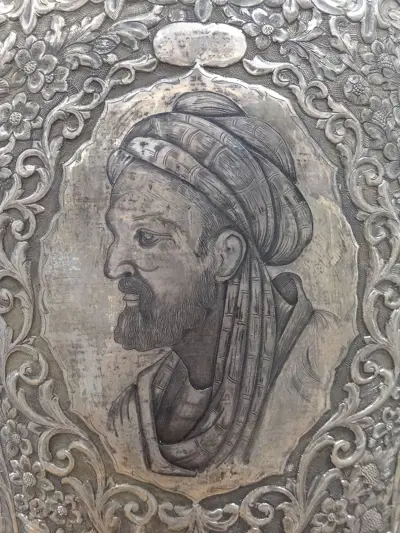
Ibn Sina, also known as Abu Ali Sina, Pur Sina, and often known in the West as Avicenna, was a Persian polymath who is regarded as one of the most significant physicians, astronomers, thinkers and writers of the Islamic Golden Age, and the father of early modern medicine. Sajjad H. Rizvi has called Avicenna "arguably the most influential philosopher of the pre-modern era". He was a Muslim Peripatetic philosopher influenced by Greek Aristotelian philosophy. Of the 450 works he is believed to have written, around 240 have survived, including 150 on philosophy and 40 on medicine.
