Scott Adams Quotes
Dilbert: I'm obsessed with inventing a perpetual motion machine. Most scientists think it's impossible, but I have something they don't. Dogbert: A lot of spare time? Dilbert: Exactly.
Adams, Scott. Dilbert. Universal Press Syndicate.


Many of his greatest ideas were not sufficiently appreciated by many other scientists nor the businessmen who funded scientific projects then. Tesla was one of the great American immigrant scientists. He found in America the kind of intellectual and operational freedom that did not exist in the rigid, monarch-controlled, Austro-Hungarian Empire. He developed patents and techniques that formed the technological bases of radio, telephone long distance, TV, cell phones, Wi Fi, just to name a few. Most important he was Thomas Edison’s great nemesis. Edison invented DC electric generators that could power factories or entire streets in a neighborhood. Tesler invented and developed AC electrical technology which could power entire cities and he could move electricity over long distances which Edison could not. Tesler was one of the first scientists to conceive of and try to implement “Big Science” where there were huge capital investments to develop machines and systems to do what had never been done before—philosophically like the CERN Hadron Collider. Tesler even convinced a large corporation to finance the construction of a massive building and tower so he could experiment with the wireless transmission of electricity. However, as the industrial democracies have learned, Big Science can only be funded by governments and it often takes sever working in consort to afford the huge investment that is required. In Tesler’s era, the federal and state governments did not fund scientific research so his work was not only technically ahead of his time but also conceptually. He anticipated most of the problems and need for a national power grid that was challenging America even at the beginning of the 21st century.


Many important breakthroughs emanated from scientific curiosity of some scientist who was not thinking of any practical application at all.


Note that the only reason given in the constitution for protecting intellectual property was to promote the progress of science and useful arts. Inventors, would keep secret their inventions and techniques of manufacture and use in order to protect their economic interests. No one else would be able to benefit by understanding the invention and taking it further and increasing knowledge and understanding. So the Founding Fathers told Congress to establish a system where inventors would get a guarantee of a reasonable time to profit exclusively from the invention in exchange for making the invention public. The plans, methods and drawings had to be made public and until the 20th century a model of an invention had to be supplied to the Patent Office. Anyone could get an inexpensive copy of any patent and come and study the models. Today, most people believe that the reason for a patent system is to protect the intellectual property of the inventor, but that was not a purpose or even a serious consideration. The reason however was educational and to demystify technology and produce more science and technology which it did.


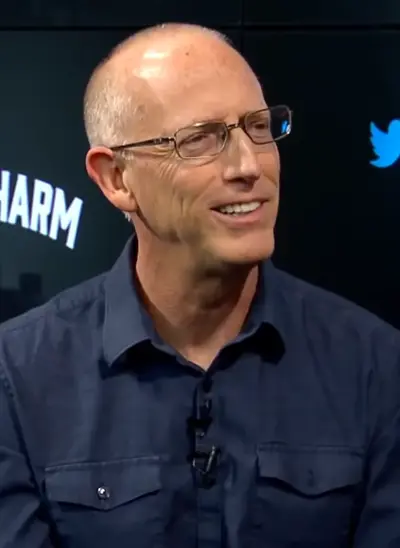
Scott Raymond Adams is an American artist and creator of the Dilbert comic strip and the author of several nonfiction works of satire, commentary, and business. His Dilbert series came to national prominence through the downsizing period in 1990s America and was then distributed worldwide. Adams worked in various roles at big businesses before he became a full-time cartoonist in 1995. He writes in a satirical, often sarcastic way about the social and psychological landscape of white-collar workers in modern business corporations.
