Herbert Marcuse Quotes
Dialectical logic undoes the abstractions of formal logic and of transcendental philosophy, but it also denies the concreteness of immediate experience. To the extent to which this experience comes to rest with the things as they appear and happen to be, it is a limited and even false experience. It attains its truth if it has freed itself from the deceptive objectivity which conceals the factors behind the facts - that is, if it understands its world as a historical universe, in which the established facts are the work of the historical practice of man.
Marcuse, Herbert. One-Dimensional Man: Studies in the Ideology of Advanced Industrial Society. Beacon Press, 1964, p. 141.


Most politicians would never do this. Ideologues rarely analyze their beliefs. Pragmatic politicians are fearful of being called a flip flopper with no core principles. However, some politicians follow this advice. For example, Abraham Lincoln and Franklin Delano Roosevelt were both among the rare politicians who would frequently change positions as they learned more. See John Maynard Keynes {619441} for a personal statement of this principle and {636175} for a modern view.


This view is very cultural and is not held by all historians. Japanese historians have always had a strong pressure to defend the nation and the Emperor. Islamic historians have almost never criticized Islam or the Phophet. These are just two examples.
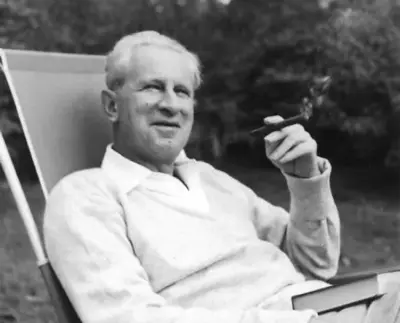
Herbert Marcuse was a German-American philosopher, sociologist, and political theorist, associated with the Frankfurt School of critical theory. Born in Berlin, Marcuse studied at the Humboldt University of Berlin and then at Freiburg, where he received his PhD. He was a prominent figure in the Frankfurt-based Institute for Social Research – what later became known as the Frankfurt School. He was married to Sophie Wertheim (1924–1951), Inge Neumann (1955–1973), and Erica Sherover (1976–1979). In his written works, he criticized capitalism, modern technology, Soviet Communism and entertainment culture, arguing that they represent new forms of social control.
