Herman Kahn Quotes
Deterrence is part objective and part subjective. The objective part is that adequate military preparedness could be critical in some important circumstances. The subjective is, in part, the perception by the potential enemy of the other side’s power, determination, and courage, as well as its estimate of the wartime effectiveness of the other side’s relative nuclear capability. If the aggressor believes that his opponent has the weapons and will use them, deterrence is likely to be effective. Therefore, a nation’s defense lies, in part, in the credibility of its threat to use nuclear force as a last resort, which means that the need remains for coherent and plausible policies for the use of nuclear weapons.
Herman Kahn, from his book “Thinking About the Unthinkable in the 1980s”, Simon & Schuster, July 1984, Hardbound.

The alternative deterrent was to maintain an army of over 2 million men overseas in both Europe and Asia, and the cost was much greater than the then perceived cost of nuclear weapons. At the time no one figured the cost of coping with the radioactive material and waste as well as the cleanup of nuclear bomb factories like Hanford. These costs were still not known byt the 21st century.


One of the many Goldwater statements that made most Americans believe he was not prudent enough to trust with the nuclear “trigger”, See {622850}.
This was his last publication. He died of a heart attack as the magazine was being printed. Since this was written one other possible use of nuclear weapons has been suggested—namely, retaliation for a biological attack. From a policy point of view, maintaining an arsenal of biological weapons for retaliatory purposes is dangerous and use for retaliation of biological weapons is not very controllable and arguably less humane than a nuclear weapon. His point however still holds. We have to have a national defense policy against many threats and we have to have defense policies that handle all these without nuclear tactics is insufficient to handle any of the threats without causing more problems and we have other weapons and techniques that are just as, if not more, effective. They and systems under development have the major role in our current defense policy.

Writing about the threat of nuclear war…


Sandia is a company that has gotten almost all their business from the Federal Government for doing research and development of nuclear weapons. Based on this view and others the AEC and the military not only developed small atomic bombs with short range rockets that could be transported in jeeps, but actually developed a 51 lb. atomic bomb that a soldier carried on his back. The idea was for these solders to parachute behind enemy lines, place the bomb near an important enemy facility and escape the critical zone on foot before the bomb exploded. It was never used in combat and receded in interest except for the fact that it proved it was possible for a terrorist suicide bomber on foot to place and explode a nuclear weapon.


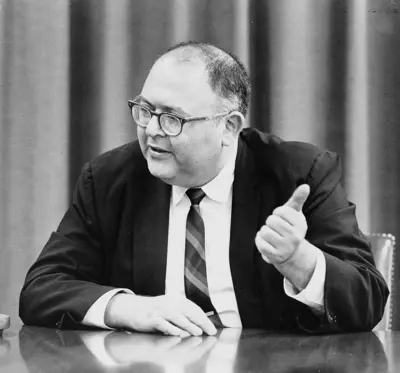
Herman Kahn was a founder of the Hudson Institute and one of the preeminent futurists of the latter part of the twentieth century. He originally came to prominence as a military strategist and systems theorist while employed at the RAND Corporation. He became known for analyzing the likely consequences of nuclear war and recommending ways to improve survivability, making him one of the historical inspirations for the title character of Stanley Kubrick's classic black comedy film satire Dr. Strangelove.
