Russell Kirk Quotes
Despite much talk in this land about religious freedom, churches and their schools now confront grave difficulties.
Kirk, Russell. Redeeming the Time. Intercollegiate Studies Institute, 1996, p. 235.


New Ross was under siege by Cromwell and his English Parliamentarian troops. After two days, the town tried to negotiate terms of surrender and one of the main things they asked for was freedom of religion to practice Roman Catholicism. This famous response set the stage for religious bigotry over the next years. Cromwell’s reasons for not allowing Catholicism to be practiced was not only one of religious zeal. At the time, the Roman Catholic Church was a major geopolitical power under a Pope who commonly supported or even dispatched troops for geopolitical and religious ends. The Vatican was particularly resentful of England for separating from the Church and asserting that the King of England was the head of the Church and not the Pope. Therefore Cromwell and many Englishmen had to deal with the reality that every practicing Catholic in the realm was a potential spy, traitor, and/or rebel. This fear of control of countries by the Pope strongly affected America, and was responsible for the defeat of the first Catholic Presidential Candidate, Al Smith. It was also a major factor in the election of John F. Kennedy so he dealt with it head on.


Catholics were blamed by some for the defeat of Henry Clay in 1844. Anti catholic sentiment was high:. Johnson was then a Congressman representing a district where there were few Catholics and strong anti-Catholic feeling.


Williams was the first theologian who not only advocated religious toleration but argued that Christianity demanded it and the separation of church and state.


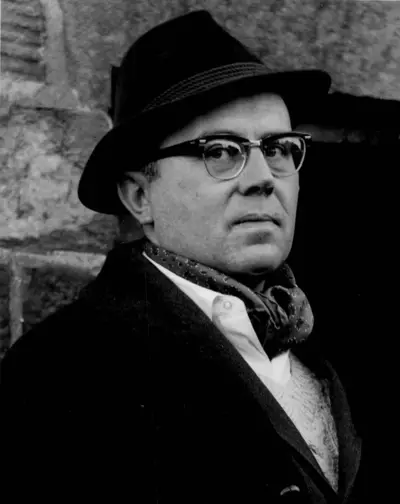
Russell Amos Kirk was an American political theorist, moralist, historian, social critic, and literary critic, known for his influence on 20th-century American conservatism. His 1953 book The Conservative Mind gave shape to the postwar conservative movement in the U.S. It traced the development of conservative thought in the Anglo-American tradition, giving special importance to the ideas of Edmund Burke. Kirk was considered the chief proponent of traditionalist conservatism. He was also an accomplished author of Gothic and ghost story fiction.
