Thomas Carlyle Quotes
[Describing himself:] ... a redtape Talking-machine, and unhappy Bag of Parliamentary Eloquence.
Thomas Carlyle, 1795-1881, Scottish essayist and historian, Member of Parliament, 1850
Sourced by: Eigen's Political and Historical Quotations


Berg, one of the early OSS recruits, was a brilliant loner and somewhat paranoid. His early modus operandi was to work with no partners, never as part of a team, and only report to the head of the agency and a deputy or two and otherwise never reveal where he was or how he did things. Berg however was brilliant and multilingual, and even was able to have discussions with the best Physicist left in Germany--Nobel Prize winner Werner Heisenberg. Berg determined that Heisenberg was not working on an atomic bomb with some clever technical discussions and listening to some of Heisenberg's presentations. Therefore, following his orders, he did not assassinate the German Scientist whuch he was prepared to do. Other than OSS officials, many in America did not believe that the Germans would not have their best scientist working on Nuclear Energy. However, Hitler was biased against what he called "Jewish Sceince" and bet on jet planes. After the war, The CIA reorganized the American espionage effort and there was no place for Berg’s old school style.

Referring to the administrative procedures required of the Navajos by the Bureau of Indian Affairs:


Maverick attended a World War II Washington meeting where the chairman used the phrases "maladjustments co-extensive with problem areas" and "utilization of factors which in a dynamic democracy can be channelized into both quantitative and qualitative phases." Maverick snorted:


Explaining why he spent $32 million without the authorization of his superiors:


He confuses modernity and religion. Muslims who live in a modern world have the same degree of bureaucracy then the Christians, Jews, Hindus, Buddhists and other religions do. The Muslims of America have the same degree of paperwork as other Americans, and the Turkish bureaucracy has as much filing and other paperwork as countries where the majority of people are of different religions. Historically, when England and France and other Christian countries were in the Dark Ages, Islamic bureaucrats kept Western and Eastern knowledge alive, and when the Ottoman Empire ruled most of the known world, they almost collapsed under their very heavy bureaucracy.


The administration and operation of scientific research is particularly vulnerable to bureaucratic processes. There is a constant tension between scientists and politicians over the accountability of publicly funded research.

Here we see the classic aristocratic arrogance of 19th century England. Bureaucracy was a French, Dutch and Spanish problem, not an English one. The reality was that England was developing the largest bureaucracy in the world.


the legal and regulatory system While this is generally true, the same very efficient private organziations sometimes act very efficiently against the interest of the public, or a part of the public in a discriminatory manner. There are other functions which for one reason or another no private organization chooses to take on, and we are left with government doing the best it can. And there are some areas where th cost of private service is just too high, and government assumes it for reasons of affordability. However sometimes there is a major problem created by competitive private organzaitions in such heated competition that the servie is terrible. In early America, Fire Fighting was assumed by private organzations, who would often fight with one another over who would handle the fire while entire neighborhoods burned down. The result was public fire service which is now the norm despite the fact that there might be better ervice in with a private company. America has attemted to balance this problem and tends to have done so better than most countries athough the issue is in contant debate in American politics.


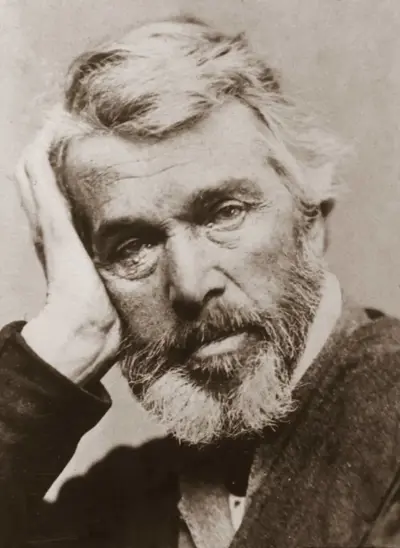
Thomas Carlyle was a Scottish historian, satirical writer, essayist, translator, philosopher, mathematician, and teacher. In his book On Heroes, Hero-Worship, and The Heroic in History (1841), he argued that the actions of the "Great Man" play a key role in history, claiming that "the history of the world is but the biography of great men". Other major works include The French Revolution: A History, 3 vols (1837) and The History of Friedrich II of Prussia, Called Frederick the Great, 6 vols (1858–65).
