Niccolo Machiavelli Quotes
Cruelties should be committed all at once.
Machiavelli, Niccolò. The Prince. Translated by Peter Bondanella, Oxford University Press, 2005, p. 33.


A Cossack revolt had broken out in 1707 and was put down by the Czar’s forces. He then issued what might be one of the first official orders for genocide. Few Cossacks survived.


The Greeks committed many atrocities in their war with Turkey. See {584483}


See Ferdinand I for the Bulgarian denial {601322}.

The human rights abuses in the Belgian Congo were horrible. Natives who refused to work for the low wages were murdered or had their hands chopped off. The indigenous population was markedly reduced. Word of the atrocities started leaking out to Europe. It is not known whether the King really wanted any reform or just sent the instructions to cover himself. The instructions were not followed; the atrocities continued, and Leopold never took any steps to discipline his agents and minions. The Belgian Congo had the worst atrocities in the world until WWII.


While there were atrocities committed by both sides in the Civil War, the proportion tended to be heavily weighted by Confederate perpetrations. The Confederate officers were not appointed by the command structure and under strict military discipline, but they were elected by the troops and could be so removed (except for the general officers who were appointed by the confederacy). Also, the confederate troops were not as well fed or supplied as the North and they had fewer resources with which to fulfill their obligations to prisoners. In a number of battles, ill-clothed soldiers stripped the Union dead, wounded and prisoners, often naked to use their shoes, blankets and clothing, Union prisoners of war were much more badly abused in the prisoners of war camps like Andersonville which were not under the command of Robert E. Lee.
This was part of the continual conflict between the Muslims and the Eastern Orthodox Christians. The Greeks ended up doubling their territory.

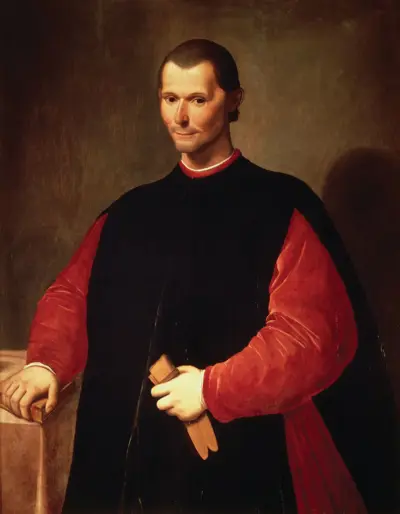
Niccolò di Bernardo dei Machiavelli was an Italian Renaissance diplomat, philosopher and writer, best known for The Prince (Il Principe), written in 1513. He has often been called the father of modern political philosophy and political science.
