Maximilien Robespierre Quotes
Crime butchers innocence to secure a throne, and innocence struggles with all its might against the attempts of crime.
Robespierre, Maximilien. Oeuvres de Maximilien Robespierre. Vol. 10, Presses Universitaires de France, 1967, p. 356.


The editor had discovered that she and her husband had had an affair before they were married and she was still married to another man. This would have ruined her husband’s political career and she decided to prevent that by killing the editor with the information. She was tried for murder and acquitted on the grounds that this was not a rationally premeditated murder but the uncontrollable emotional reaction of a woman who was so weak that she had no control over her actions. This was the excuse that the jury needed, as the personal slandering of politicians for things unrelated to their political activity was becoming very unpopular. This affair was the beginning of the tendency of the French media to not write about the personal and sexual activities of politicians which became a strong cultural tradition.

She was a member of the opposition party and was criticizing the Conservative Government.


Mark Twain referring to and reflecting on his encounter with the Sultan of Turkey, Abdul Aziz.

The Pope was justifying his earlier excommunication of Holy Roman Emperor Henry IV who in turn excommunicated Pope Gregory.


This is a variation of the famous Lord Acton quotation: {292904}.


Charles I had caused the death of his subjects with impunity and was called to account. However, the English Parliament did not know what specific crime the King had committed. Kings had executed people, guilty of crimes and otherwise, for centuries. For what could a king be accountable. Cooke developed the crime of Tyranny and drew up and presented the indictment for that. The King was found guilty and executed. This was the first time in legal history that a ruler was called to account for crimes committed against his own people. It became the foundation for many trials thereafter including that of Saddam Hussein in 2006.


This and other quotations like {640611} and {640616} show that the State Department knew that Mobutu Sese Seko, the man we were backing in the Congo had many very undesirable characteristics for a dependable foreign ally and one who would be given control of billions of American money. Yet nothing was done and we continued to support him despite the kleptocracy and the instability that undermined his regime and the United States along with it.


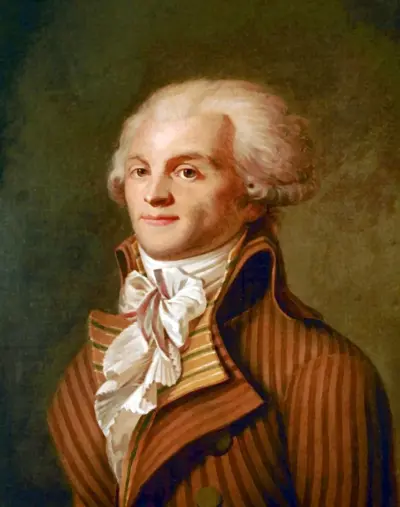
Maximilien François Marie Isidore de Robespierre was a French lawyer and statesman who was one of the best-known and most influential figures of the French Revolution. As a member of the Constituent Assembly and the Jacobin Club, he campaigned for universal manhood suffrage and the abolition both of celibacy for the clergy, and slavery. In 1791, Robespierre became an outspoken advocate for the citizens without a political voice, for their unrestricted admission to the National Guard, to public offices, and for the right to carry arms in self-defence. Robespierre played an important part in the agitation which brought about the fall of the French monarchy on 10 August 1792 and the summoning of a National Convention. His goal was to create a one and indivisible France, equality before the law, to abolish prerogatives and to defend the principles of direct democracy.
