H. G. Wells Quotes
Crime and bad lives are the measure of a State's failure, all crime in the end is the crime of the community.
Wells, H. G. A Modern Utopia. Chapman & Hall, 1905, p. 144.


Reacting to urban riots and disorders of the day, the then congressman said:


He was referring to the large Muslim immigration that France had been experiencing. He told his followers this absurd statement although the immigrants he blamed were only 10 percent of the French population and the crimes of the other 90 percent had nothing to do with immigration.


The increase compared to the rest of the world really occurred in the 1980s when The War on Drugs began jailing drug users and dealers and that accounts for the major difference. The 3000 different federal crimes, if an accurate number, is all the more remarkable because in America, the major part of law enforcement is handled by the state and local governments.

The problem of the person who economically profits from the crimes of others has been with America for many years as this quotation shows. I later example was when in 2011, almost all of the large banks hired people as Vice Presidents and those people in turn falsified information and legal documents in mortgage foreclosures. The higher up bank executives who profited from this illegal activity were never prosecuted by the Obama administration. Similarly, the consumer frauds of securities sales representatives, made fortunes for the stock broker partners who almost always were never criminally prosecuted even though almost all their sales personnel were telling prospective customers the same fraudulent information.

It is hard to imagine what could be harsher. Some have called for his arrest and trial for crimes against humanity.
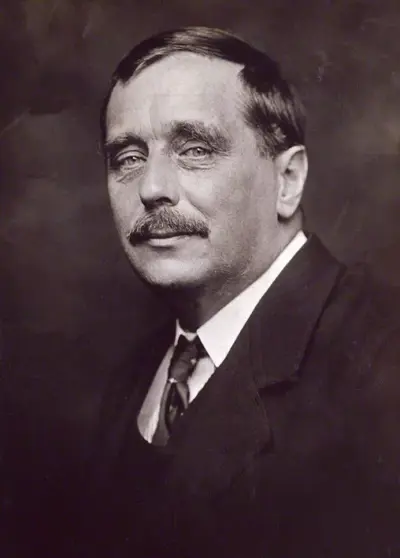
Herbert George Wells —known as H. G. Wells—was a prolific English writer in many genres, including the novel, history, politics, social commentary, and textbooks and rules for war games. Wells is now best remembered for his science fiction novels and is called a "father of science fiction", along with Jules Verne and Hugo Gernsback.[a] His most notable science fiction works include The Time Machine (1895), The Island of Doctor Moreau (1896), The Invisible Man (1897), and The War of the Worlds (1898). He was nominated for the Nobel Prize in Literature four times.
