James Wolfensohn Quotes
Corruption is a cancer on the body of development.
James Wolfensohn, President of The World Bank, Quoted on PBS The Charlie Rose Show, May 30, 2007
Sourced by: Eigen's Political and Historical Quotations


In the 1824 presidential election Jackson won a plurality of popular and electoral votes but not a majority. The election was thrown into the House of Representatives where Speaker Henry Clay cut a deal with John Quincy Adams who had finished second. Adams became President and Clay, Secretary of State.


He had not committed any felonies, but these charges were laid under the concept of “high crimes and misdemeanors”.


He and the other commissioners of both political parties were agreed that the procurement by The State Department, USAID, and especially the Defense Department which spent the most was terrible. The even had military generals in charge of billions of dollars of procurement who did not even know the procurement laws and regulations they were supposed to obey much less the skill of good procurement.

The United States had just ousted the popularly elected leader Patrice Lumumba {640611}, and backed Mobuto. Lumumba was an idealist who was not corrupt at all, but were not so sure about our new protégé. Sadly he turned out to be one of the worst kleptocrats of all time, and he stole with more United States money than we gave to many nations in toto. Many believe that one of the reasons, corruption of our “allied” leaders was so bad lies in the wording of this cable. Note that to the State Department writers there was “normal” corruption as opposed to excessive corruption. Once that view is taken there is a constant battle to determine whether each new act of corruption is “normal “ or not, and corruption is simply lessened by pushing back against the most abnormal schemes. These critics advocate a zero tolerance for corruption especially with United States AID money. The State Department has been ambivalent and have often used the corruption system to bribe leaders to obtain national objectives.


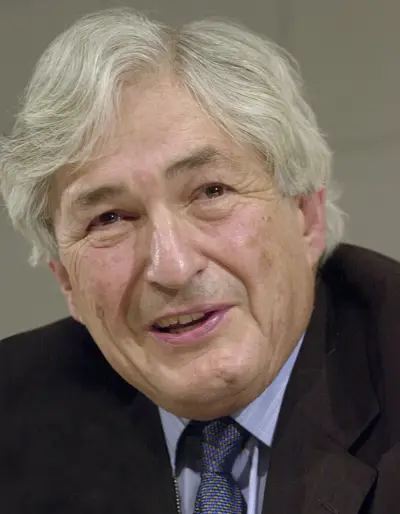
Sir James David Wolfensohn KBE AO was an Australian-American lawyer, investment banker, and economist who served as the ninth president of the World Bank Group (1995–2005). During his tenure at the World Bank, he is credited with the focus on poverty alleviation and a rethink on development financing, earning him recognition as a banker to the world's poor. In his other roles, he is credited with actions that brought Chrysler Corporation back from the brink of bankruptcy, and also improving the finances of major United States cultural institutions, including Carnegie Hall and the Kennedy Center. He served two terms as President of the World Bank on the nomination of U.S. President Bill Clinton, and thereafter held various positions with charitable organizations and policy think-tanks including the Brookings Institution.
