Samuel P. Huntington Quotes
Corruption may be one way of surmounting traditional laws or bureaucratic regulations which hamper economic expansion.
Samuel P. Huntington,1927–2008, Political Scientist, Director of Planning, National Security Agency President, American Political Science Association, Political Order in Changing Societies, 1968
Sourced by: Eigen's Political and Historical Quotations


She was the first Female President of Mauritius.


In many countries throughout the world, corruption is rampant and any contractor to the government has to pay and often offers to pay the appropriate government officials. In the most corrupt countries like Nigeria, corruption is rife in all levels of government but is technically illegal. While in Saudi Arabia, the government has institutionalized the bribery and corruption but limited the amount to 6 percent. Corruption of this type is not only existent on government contracts but often operates for private money where government approval must be obtained. World Bank contracts for example are notorious for the percentage that must be paid to government officials despite the fact that the World Bank officially claims to be against corruption.

Abramoff had bribed over 100 Congressional offices by a combination of campaign donations, paid golf junkets all over the world, free elegant meals at his own fancy Washington Restaurant, free tickets for the Congressmen, their staffs and their major constituents, to Concerts and sporting events including his own Skyboxes, and promises of future employment at very high salaries. Ironically, we was convicted of cheating some of his lobbying clients and did a jail term, but his “bribery” was technically usually legal. In addition to Abramoff, only one Congressman was charged and convicted of corruption, when many if not most had engaged in these corrupt practices. Congress makes the rules with loopholes so that what is bribery and corruption in any other setting is often not against the law if Congress is involved.


When his wife Benizir Bhutto was prime minister, there was a perception of many Pakistanis that he was getting 10% graft on all government construction, development and purchases. After his wife was assassinated, he was elected Prime Minister, and the notorious nickname stuck even then.

The United States had just ousted the popularly elected leader Patrice Lumumba {640611}, and backed Mobuto. Lumumba was an idealist who was not corrupt at all, but were not so sure about our new protégé. Sadly he turned out to be one of the worst kleptocrats of all time, and he stole with more United States money than we gave to many nations in toto. Many believe that one of the reasons, corruption of our “allied” leaders was so bad lies in the wording of this cable. Note that to the State Department writers there was “normal” corruption as opposed to excessive corruption. Once that view is taken there is a constant battle to determine whether each new act of corruption is “normal “ or not, and corruption is simply lessened by pushing back against the most abnormal schemes. These critics advocate a zero tolerance for corruption especially with United States AID money. The State Department has been ambivalent and have often used the corruption system to bribe leaders to obtain national objectives.


The leaders and creators of these anti-corruption organizations get kickbacks from corrupt officials and organizations to be sure that they do not get investigated and exposed. In some cases they frame an honest politician who would not pay them and accuse him of corruption to show the public that they are cracking down on corruption. Or they go after corrupt politicians who are going against the regime on political matters. Not all anti-corruption and reform organizations are corrupt themselves, but many are. But the methods of corruption thoughout the world are becoming more and more sophisticated as the simple forms are being exposed by media and reform groups.


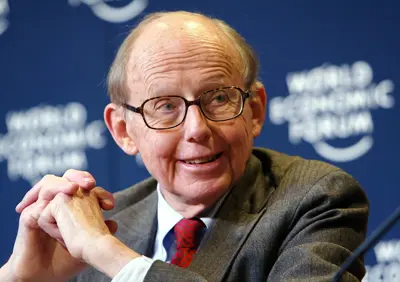
Samuel Phillips Huntington was an American political scientist, adviser and academic. He spent more than half a century at Harvard University, where he was director of Harvard's Center for International Affairs and the Albert J. Weatherhead III University Professor.
