R. Buckminster Fuller Quotes
Corporations are neither physical nor metaphysical phenomena. They are socioeconomic ploys — legally enacted game-playing — agreed upon only between overwhelmingly powerful socioeconomic individuals and by them imposed upon human society and its all unwitting members.
R. Buckminster Fuller, 1895–1983, Architect, Philosopher & Inventor, Grunch of Giants, 1983
Sourced by: Eigen's Political and Historical Quotations


Chomsky sees this as a problem. Many others see it as a virtue that government agencies receive current information from companies and that there is an exchange of personnel where company officials bring their experience to assist government and corporations benefit from having executives who had some government experience.


He had just retired after 24 years in Congress.

This memo was sent before he was nominated as a Supreme Court Justice. The Senate did not know of this memo at the time he was ratified otherwise he might not have been. Powell saw every serious critic of the American Economy or the existing government policies as “attacking” the American Free Enterprise System. Surprisingly, he thought that business executives were rather helpless when it came to supporting the status quo.

Abrams had a long track record of defending the 1st Amendment that he was generally perceived as a liberal. However, he was the winning Attorney for Citizens United where the Suprme Court ruled 5-4 that spending money on campaigns was a form of speech and the government may not regulate the amount of speech (money) for a corporation of a person.

Leaders of nations for years only trusted as truly patriotic those man—usually nobles of the aristocracy—who owned land. If an invader came and seized their land, they would lose their wealth. However money is fungible, and a banker can easily move his money abroad and join another nation or side in a war. If the country is ruined by war, the manufacturer cannot obtain labor or raw materials, The financier depends on none of these and so hs not the vested interest in the welfare of the nation.

The Bank was privately owned. Jackson was a major opponent of the Bank. See his description {630650} .


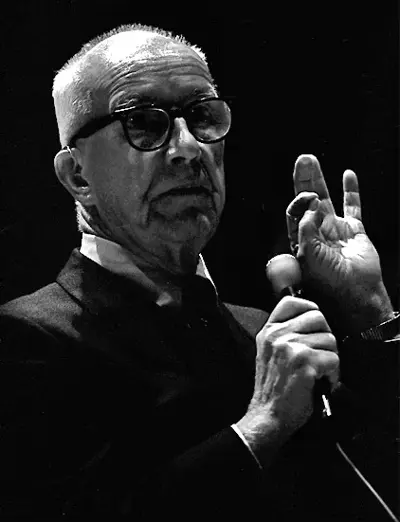
Richard Buckminster Fuller was an American architect, systems theorist, author, designer, inventor, and futurist. He styled his name as R. Buckminster Fuller in his writings, publishing more than 30 books and coining or popularizing such terms as "Spaceship Earth", "Dymaxion" (e.g., Dymaxion house, Dymaxion car, Dymaxion map), "ephemeralization", "synergetics", and "tensegrity".
