James Surowiecki Quotes
Corporate welfare isn't necessarily a bad thing.
Surowiecki, James. "The Financial Page." The New Yorker, Condé Nast.


The Kimberly and Comstock lodes were natural deposits of copper and silver so close to the surface that it required very little work to remove the metal and sell the it.


A libertarian economist, he argued against government subsidies in principle but here observed that our efforts of subsidizing certain industries to keep foreign products.


At the time, the economy was virtually controlled by the banks and others in the finance, as opposed to businesses that produced things or provided non-financial services to consumers and business which was that had prevailed ever since the Great Depression, when New Deal legislation controlled the banks, stock markets, and other facets of the financial industry.

She was then the European Commissioner for Competition.


All the objections that Coolidge had in his veto message, were not convincing to modern Presidents and members of Congress as well as well the American people. Our Agricultural policy has had all these elements for years now.


Referring to large corporations receiving substantial tax advantages and other subsidies:


From working in a sweatshop, she became the richest woman in China.

The notion of government subsidies to private companies that performed valuable pubic services—public-private partnerships was used extensively by Clinton and was one of reasons that New York developed faster than the other Colonies. At the formation of America, Virginia and Pennsylvania were much bigger and wealthier states than New York. In large part, Clinton led the rapid growth and development.

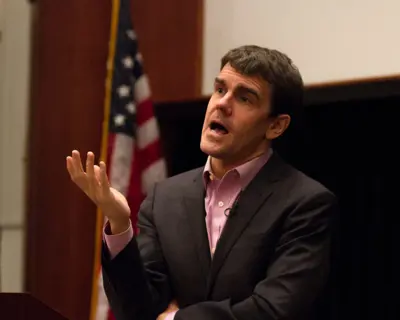
James Michael Surowiecki is an American journalist. He was a staff writer at The New Yorker, where he wrote a regular column on business and finance called "The Financial Page".
