Thomas Muir Quotes
Connect liberty with knowledge and both with morality.
Muir was tried and convicted for sedition for his speech, and at his trial in August 1793 he repeated the quotation claiming that it was not seditious. He was advocating extending the vote to male, non-land owners. See Robert MacQueen Braxfield.
Thomas Muir, *, Scottish Barrister & Reformer, Co-Founder, Scottish Friends of the People, Speech, First Convention of the Scottish Friends of the People, December 1792
Sourced by: Eigen's Political and Historical Quotations

Note that the two do NOT ALWAYS coincide. There are those who argue that law should be respected, right or wrong. There are also those who argue that law should be respected, only when it is in the right. Note also that “respect” and “obedience” are two different things. Some people argue that law and the courts and government must have respect. Others that they are only due obedience but not necessarily respect when they are in the wrong. Still others, like Thoreau, that obedience even is not required when the law is wrong. There are those who take this to the degree that obedience to a “wrong” law is wrong and there is a DUTY to disobey a wrong law. However, a more nuanced view does not treat all laws as the same importance. I may think a particular tax is unjust and wrong, but obedience does not necessarily have moral consequences. A law that says that people with a certain religion must not be hired, however, is sufficiently immoral that I am obliged to disobey it.


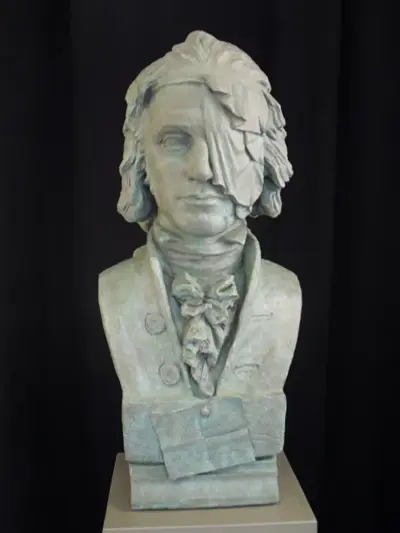
Thomas Muir, often known as Thomas Muir the Younger of Huntershill, was a Scottish political reformer and lawyer. Muir graduated from Edinburgh University and was admitted to the Faculty of Advocates in 1787, aged 22. Muir was a leader of the Society of the Friends of the People. He was the most important of the group of two Scotsmen and three Englishmen The Political Martyrs monument, Edinburgh (the others being Thomas Fyshe Palmer, William Skirving, Maurice Margarot and Joseph Gerrald). In 1793 after a show trial in Edinburgh for advocating democratic parliamentary reforms and votes for all men, they were sentenced to transportation to Botany Bay Australia for sedition.
