William Eustis Quotes
Congress must not meet without a victory to announce to them.
At the beginning of the War of 1812 which America declared, Eustis, then Secretary of War, wanted the Congress to markedly increase the size of the army and navy, but there was much public and Congressional antipathy and apathy.
William Eustis, 1753-1825, Governor of Massachusetts, U. S. Secretary of War, Letter to the U. S. Commanding General, July 12, 1812
Sourced by: Eigen's Political and Historical Quotations


of requests from conservative Congressmen who want pork projects added to appropriation bills In one of the great ironies of Washington, Dyer was named “Porker of the Year” yet there was no pork placed in appropriations bills that were not specifically requested (insisted upon) by a member of Congress.

Yet he fought very hard to get the speakership and keep it. It was particularly frustrating for him however as he had the Tea Party wing of his party who just wanted to stop and reduce government and its spending and would not compromise on issues. So he could not even negotiate for his majority in the House as without the Tea Party, he did not have a majority.

Automated Teller Machine by which banks dispense cash.

Americans had never had the opportunity to see this committee in action before. While many Americans were intimidated, many were also very distressed to see how a Congressional Committee was abusing its power. And although the frightened Hollywood and network executive executives were intimidated into blacklisting Lawson and others, more and more Americans were lining up against this committee and Senator McCarthy’s committee in the Senate. This culminated in the Senate sanction of McCarthy and the discrediting of HUAC which never again had the influence that they had before this hearing.


During the American Revolution, conditions were very difficult for Washington’s soldiers who were ill armed, ill clothed, and ill fed while they were paid irregularly. At one point morale was so low that some of the soldiers revolted. Smyth observes that Washington and Congress disciplined the mutineers very mildly, especially when compared with the way the British would deal with such things. The British Governor Clinton tried to take advantage of the mutiny and the poor morale by announcing that all of Washington’s troops who wished could obtain amnesty and join the British forces where the pay and conditions were much better. Professor Smyth found it fascinating that none of the Americans would join the British and he credits it to the wise and mild discipline policies of Washington and Congress as well as the general perception of the justice of the American cause among the American troops.

He had an old used desk, with an old worn rug on the floor. Harry Hopkins was the special assistant to President Franklin Delano Roosevelt through the two great American crises, the Great Depression and World War II. Although he was a social worker with not a shred of political experience, Hopkins was originally selected by the President to operate the national relief program in the midst of the Great Depression. Soon he had spent more money than any human being in history without a taint of scandal. He had never been elected nor was he even ratified by the Senate. He also paid virtually no attention to members of Congress as he became the most successful manager in American Government history. Soon he became FDR’s most important aid. Then he and his wife actually moved into the White House and lived there with the Roosevelts and was a favorite of not only FDR but Eleanor Roosevelt as well.


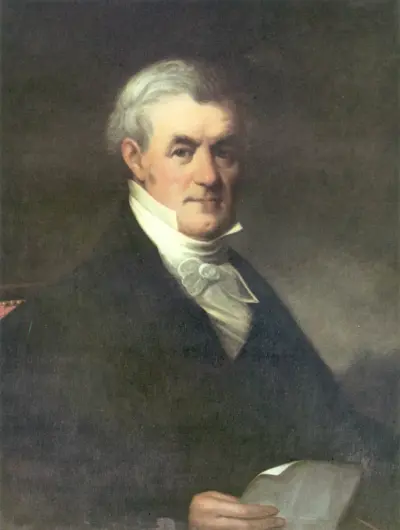
William Eustis was an early American physician, politician, and statesman from Massachusetts. Trained in medicine, he served as a military surgeon during the American Revolutionary War, notably at the Battle of Bunker Hill. He resumed medical practice after the war, but soon entered politics.
