Harry Hopkins Quotes
I don’t want any Senator coming in here and seeing me in a luxurious setting when I am asking for millions of dollars to help the unemployed.
He had an old used desk, with an old worn rug on the floor. Harry Hopkins was the special assistant to President Franklin Delano Roosevelt through the two great American crises, the Great Depression and World War II. Although he was a social worker with not a shred of political experience, Hopkins was originally selected by the President to operate the national relief program in the midst of the Great Depression. Soon he had spent more money than any human being in history without a taint of scandal. He had never been elected nor was he even ratified by the Senate. He also paid virtually no attention to members of Congress as he became the most successful manager in American Government history. Soon he became FDR’s most important aid. Then he and his wife actually moved into the White House and lived there with the Roosevelts and was a favorite of not only FDR but Eleanor Roosevelt as well.
Harry Hopkins, 1890-1946, U. S. Secretary of Commerce (Democrat), Director, Works Progress Administration, Director, Federal Emergency Relief Administration, Special Assistant to the President, Explanation to staff member Elizabeth Wickendon of his deliberately shabby office,
Sourced by: Eigen's Political and Historical Quotations

In the midst of the depression:

Reading this quotation illustrates how some things in America change hardly at all over time. His description of the conservatives of his day, was the same that a liberal might make 60 years later. This quotation illustrates the statements of White that caused conservatives to dislike him. However, most historians agree that White passed classified information to the Russians. He was accused of being a Communist, but there was never any evidence of that. Some people believe that he was a spy for the Russians and committed espionage, but others disagree observing that White was very much his own man and felt that much information that was classified never should have been. White substituted his own judgment, it is believed, about what could be given to the Russians. He was an admirer of what Russian socialism had accomplished economically, educationally and medically since the 1917 revolution deposing the Czar. Russia had been a valuable military ally, which had taken the brunt of both military and civilian casualties in WWII. White’s economics were certainly not Marxist but very much Keynesian. He was subpoenaed by the House Un-American Activities Committee where he was accused of being a Communist which he denied (see {634907}). He died of a heart attack 3 days later.


The country was in the midst of the Great Depression with a huge part of the nation unemployed. President Hoover and the Republicans had refused to provide any direct assistance to the unemployed—there was no unemployment insurance then. They actually believed that there was a danger of corrupting workers by providing assistance and ruining the American workforce. FDR probably saved the nation from massive violence by providing direct help to the unemployed but notice the way that he had to phrase such a notion which was then regarded as radical and socialistic by many conservatives.


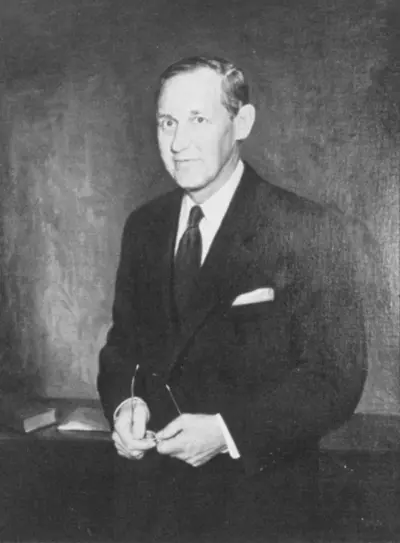
Harry Lloyd Hopkins was the 8th Secretary of Commerce, and President Franklin Delano Roosevelt's closest advisor on foreign policy during World War II. He was one of the architects of the New Deal, especially the relief programs of the Works Progress Administration (WPA), which he directed and built into the largest employer in the country. In World War II, he was Roosevelt's chief diplomatic troubleshooter and liaison with Winston Churchill and Joseph Stalin. He supervised the $50 billion Lend-Lease program of military aid to the Allies.
