Slavoj Zizek Quotes
Confucius was not so much a philsopher as a proto-ideologist: what interested him was not metaphysical Truths but rather a harmonious social order within which individuals could lead happy and ethical lives. He was the first to outline clearly what one is tempted to call the elementary scene of ideology, its zero-level, which consists in asserting the (nameless) authority of some substantial Tradition.
Žižek, Slavoj. Less Than Nothing: Hegel and the Shadow of Dialectical Materialism. Verso, 2012.


Bastiat raised the possibility that economics and social science cannot be analyzed because it follows no laws like the hard sciences. See {620083} for a modern variant.

Al-Maarri’s quotations are not only meaningful in their own right, but they illustrate the openness and free thinking that was allowed in the early days of Islam before about 1100. If anyone wrote such things today in most Islamic countries he would at least be jailed if not executed for blasphemy. Al-Maari view of the unreliability of authority preceded Western philosophers like Spinoza by over 500 years. When the Jews and Christians, and the Muslims of the day, read Spinoza, they all excommunicated him. But al-Maari, in the intellectual flowing of Islam in Syria at the time was unmolested.


Marqués de Valdegamas. He was a descendant of the conquistador, Hernando Cortez.


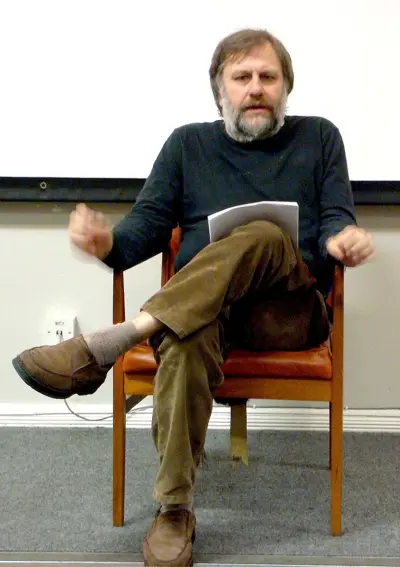
Slavoj Žižek is a Slovenian philosopher, a researcher at the Department of Philosophy of the University of Ljubljana Faculty of Arts and international director of the Birkbeck Institute for the Humanities of the University of London. He is also Global Eminent Scholar at Kyung Hee University in Seoul and Global Distinguished Professor of German at New York University. He works in subjects including continental philosophy, psychoanalysis, political theory, cultural studies, art criticism, film criticism, Marxism, Hegelianism and theology.
