Li Peng Quotes
Comrade Deng Xiaoping - along with other party elders - gave the party leadership their firm and full support to put down the political disturbance using forceful measures.
Li, Peng. The Critical Moment: Li Peng Diaries. New Century Press, 2010.


Many American ideologues assumed that the Chinese Communist Revolution would lead to an economic collapse. They did not realize that historically a competitive business economic system had been operational in the Chinese culture for thousands of years. In reality the economy was however really being suppressed somewhat by the Mau style of communism. When Deng loosened up the economic rules in China, their “Communist” system not only functioned as it had under Mao, but then thrived and China became a world economic power in just a relatively few years.


In one of the most dramatic events in the history of Russia the President resigned his leadership post of the Communist Party.
Chinese private corporation. Party rules written in 1989 prohibit private-enterprise “exploiters” from being members of the party much less holding leadership positions as the party is “the vanguard of the working class.

With martial law came the authority to seize ALL guns in the colony for the emergency. This was not to disarm the general populace. It reflected the fact that there were relatively few colonists who owned guns as they were very expensive. The Governor could take those that existed and use them to defend against the rebels or whatever. There were more gun owners in the Revolution but still a minority. Even after the War of 1812 only 30% of Americans were armed, and that shortly decreased to 10% as there was no real culture of gun ownership in early America. This would come around the Civil War.


The early revolutionary Chinese Communists had a much more democratic and civil-liberties oriented view of government than after the had won and gained control of China. Then the problems were so enormous with such meager resources that the insecurity of the party government let to a civil rights flip flop and a politically authoritarian government. Stability is today the most important priority for the Chinese Communist party so that free speech, protests and other civil liberties are curtailed. Economic development is the more important activity and political development is lagging, but while economic development is racing ahead, Chinese political development improves only slowly. Dissidents like Liu Xiaobo are pushing the process.

This has been the case ever since WWII. In the Great March where the Communists avoided capture by the Nationalists, the army, the party, and many of the people were in a single amalgam living on the move. The positive and fair behavior of the Communist army during the Great March did a great deal to convince the Chinese peasants that the Communists were not corrupt and greedy as were most of the Nationalist officials they ran into. From a strict military point of view, there was little for the Army to do for defense and national security since the overthrow of the Nationalists. So they have been great supporters of development of the nation after the revolution, but by the 21st century had developed some of their own corruption and built companies to produce funds for the army (and some of its leaders personally.
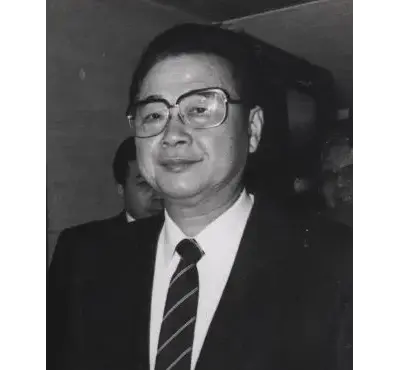
Li Peng was a Chinese politician who was the fourth Premier of the People's Republic of China from 1987 to 1998, and as the Chairman of the Standing Committee of the National People's Congress, China's top legislative body, from 1998 to 2003. For much of the 1990s Li was ranked second in the Communist Party of China (CPC) hierarchy behind then Party General Secretary Jiang Zemin. He retained his seat on the CPC Politburo Standing Committee until his retirement in 2002.
