Robert D. Putnam Quotes
Community connectedness is not just about warm fuzzy tales of civic triumph. In measurable and well-documented ways, social capital makes an enormous difference in our lives...Social capital makes us smarter, healthier, safer, richer, and better able to govern a just and stable democracy.
Putnam, Robert D. Bowling Alone: The Collapse and Revival of American Community. Simon & Schuster, 2000, p. 290.


America followed the English example of forming associations (corporation and non-profit organizations) for everything from science to orphanages, libraries to agricultural organizations. But America went much further than England in the number, scale and scope. De Tocqueville was most amazed and impressed by this.


This is a remarkable quotation. Cixi attributed the great success of the Western nations and their power to their democracy, This was a time that many in England and Europe were still struggling with the degree that democracy was desirable and even in America there were many who thought American success was in spite of democracy, not because of it. Ironically, this view was rejected after Cixi by the rulers of China who concluded that heavy central rule was required to keep China stable, Sun Yat Sen and Chiang Kai Chek gave lip service to the desirability of long range democracy but maintained dictatorial rule and in Chiang’s case a very cruel and corrupt dictatorship as well. When Mao and his Communists ousted Chiang, the too rejected political democracy, and a century after this Chinese Empress pointed the way, China had still not “connected the ruled with the ruling”.


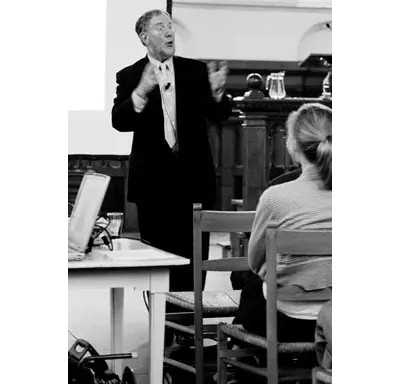
Robert David Putnam (born 1941) is an American political scientist. He is the Peter and Isabel Malkin Professor of Public Policy at the Harvard University John F. Kennedy School of Government. Putnam developed the influential two-level game theory that assumes international agreements will only be successfully brokered if they also result in domestic benefits. His most famous (and controversial) work, Bowling Alone, argues that the United States has undergone an unprecedented collapse in civic, social, associational, and political life (social capital) since the 1960s, with serious negative consequences. In March 2015, he published a book called Our Kids: The American Dream in Crisis that looked at issues of inequality of opportunity in the United States. According to the Open Syllabus Project, Putnam is the third most frequently cited author on college syllabi for political science courses.
