Richard Nixon Quotes
Communism starts with the proposition that there are no universal truths or general truths of human nature.
Nixon, Richard. The Real War. Warner Books, 1980.


Ataturk was not receptive toward Communism as some other world leaders were at the time. He saw its weakness far earlier than many others.

Vladimir Lenin. Although Plekhanov was the intellectual giant of Russian communism, he died only two years into the revolution. He was never happy with some of the pragmatic compromises the younger firebrand communist leaders were making from their ideals. By the time he passed away, most, especially the younger, communist leaders like Stalin saw him as an old obstructionist and he was never celebrated as a hero by the communists. It was Lenin and older leaders like Trotsky who appreciated him. See {590462}.


In 1927 the Russian Communist Party changed its position regarding the world union movement. Prior to that the Communists would not organize unions competing with already existing trade unions. Foster was one of the communist leaders who was the strongest advocate of this solidarity of the working class. However, after years of preaching one thing, he reversed himself. This type of adherence to party discipline led to him getting a derogatory nickname. See {592421}.


The reason this is an important quotation is that since the end of WWII, most Americans have used the term “socialism” rather loosely. President Obama for example is often referred to as a socialist by his political enemies. Conservatives refer to Norway, Sweden and Denmark and other European nations as socialist states. But none of them would ever meet the definition of a socialist state of the major socialist state in history. After WWII, the Russians intimidated many of the Eastern European with force of arms and there were some other socialist states for a while but the all abandoned Soviet style Russian socialism, Ironically, the only state that the old Russian Communists would recognize in 2011 was Cuba. However, there are many who call themselves socialists who would never agree that the Soviet Union was remotely a socialist state—they see it as a Fascist dictatorship.


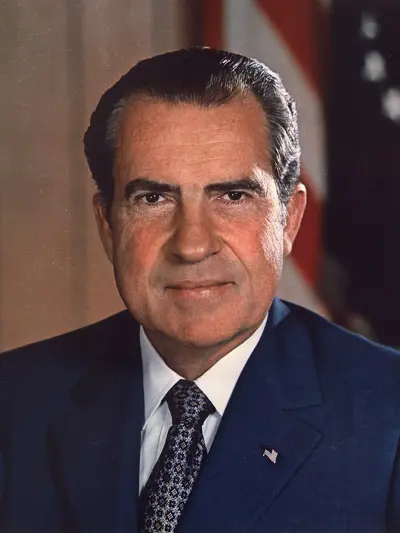
Richard Milhous Nixon was the 37th president of the United States, serving from 1969 to 1974. A member of the Republican Party, Nixon previously served as the 36th vice president from 1953 to 1961, having risen to national prominence as a representative and senator from California. After five years in the White House that saw the conclusion to the U.S. involvement in the Vietnam War, détente with the Soviet Union and China, and the establishment of the Environmental Protection Agency, he became the only president to resign from the office, following the Watergate scandal.
