Clare Boothe Luce Quotes
Communism is the opiate of the intellectuals.
This line was a takeoff on the famous quotation of Karl Marx: {624064}.
Clare Boothe Luce, 1903-1987, U.S. Congresswoman (Republican, CT), U. S. Ambassador to Italy & Brazil, Quoted in Newsweek, Jan. 24, 1955
Sourced by: Eigen's Political and Historical Quotations

Although this is one of Marx’s more famous quotations, he had Napoleon Bonaparte {39959} to thank for the concept of the use of religion as a political tool. A Napoleon contemporary Chartist, Charles Kingsley, {441604} in 1848 also made the analogy between religion and opium for political control.


Ataturk was not receptive toward Communism as some other world leaders were at the time. He saw its weakness far earlier than many others.


Unlike most of his televangelist successors, Sheen was very ecumenical. He was clearly Catholic but had a very significant Protestant and Jewish Audience.


Since the end of WWII till the breakup of the Soviet Union, the Bulgarians were part of the Soviet Bloc and operated under communism that was supposedly based on Marxism. However it was not in many critical respects. But few modern Russian style Communists are familiar with or understand Marxism.


Hoover’s testimony not withstanding, communism in America never did spread like an epidemic.

Vladimir Lenin


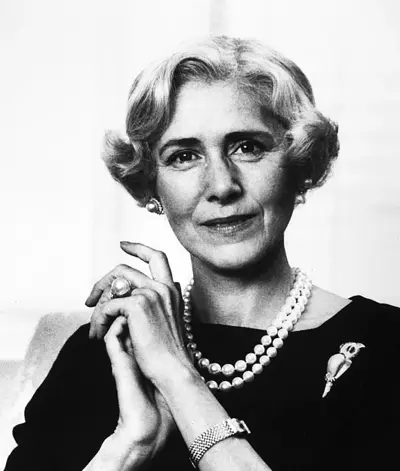
- Born: March 10, 1903
- Died: October 9, 1987
- Nationality: American
- Profession: Editor, Playwright, Politician, Journalist, Diplomat
Ann Clare Boothe Luce was an American author, politician, U.S. Ambassador and public conservative figure. A versatile author, she is best known for her 1936 hit play The Women, which had an all-female cast. Her writings extended from drama and screen scenarios to fiction, journalism and war reportage. She was the wife of Henry Luce, publisher of Time, Life, Fortune, and Sports Illustrated.
