Ibn Khaldun Quotes
Civilization both in the East and the West was visited by a destructive plague which devastated nations and caused populations to vanish. It swallowed up many of the good things of civilization and wiped them out. It overtook the dynasties at the time of their senility, when they had reached the limit of their duration. It lessened their power and curtailed their influence. It weakened their authority. Their situation approached the point of annihilation and dissolution. Civilization decreased with the decrease of mankind. Cities and buildings were laid waste, roads and way signs were obliterated, settlements and mansions became empty, dynasties and tribes grew weak. The entire inhabited world changed
He was one of the world’s greatest polymaths who among his other accomplishments was the “Father of Sociology” and was the leading Islamic intellectual of his era.
Ibn Khaldun, 1332-1406, Tunisian Islamic astronomer, economist, historian, Islamic jurist, Islamic lawyer, Islamic scholar, Islamic theologian, mathematician, military strategist, nutritionist, philosopher, social scientist and statesman, Description of the effect of the Black Plague, Michael W. Dols, The Black Death in the Middle East, Princeton University Press, 1977
Sourced by: Eigen's Political and Historical Quotations

The graphic is a painting of the effect of the plague in Ireland. Clearly his first sentence exaggerates, but there were some areas where most humans died. See {620882} for a Muslim Historian’s description of the plague.


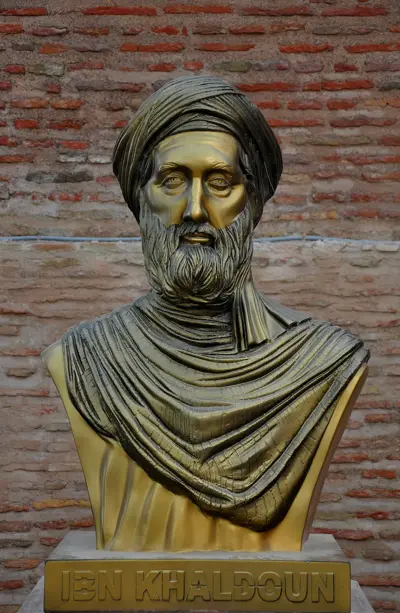
Ibn Khaldun was an Arab sociologist, philosopher and historian who has been described as the founder of the modern disciplines of historiography, sociology, economics, and demography. Niccolò Machiavelli of the Renaissance and the 19th-century European scholars widely acknowledged the significance of his works and considered Ibn Khaldun to be one of the greatest philosophers of the Middle Ages.
