Ibn Khaldun Quotes
The plague swallowed up many of the good things of civilization and wiped them out. The entire world changed.
Abd al-Rahman Ibn Mohammad
Ibn Khaldun, 1332-1406, Tunisian Historian & Social Scientist, Chronicle of the effect of the Black Plague where between half and three quarters of the population of Europe and North Africa were wiped out, Quoted on The History Channel, The Plague, March 6, 2013
Sourced by: Eigen's Political and Historical Quotations

He was one of the world’s greatest polymaths who among his other accomplishments was the “Father of Sociology” and was the leading Islamic intellectual of his era.


He is in charge of collecting and deploying the funds donated for infectious diseases from countries throughout the world. Each nation has its own budget cycle and the public health officials have to plan and act as soon as they learn that an epidemic is breaking out. The viruses and bacteria grow when they grow, not when budgets have planned for them.
The graphic is a painting of the effect of the plague in Ireland. Clearly his first sentence exaggerates, but there were some areas where most humans died. See {620882} for a Muslim Historian’s description of the plague.


The white Europeans had over centuries built up immunity to some of the worst infectious diseases but when they first landed in the New World brought smallpox and other deadly diseases to which the Indians had no immunity.


Despite strong efforts by the health authorities, many Americans went into an irrational panic mode regarding Ebola and States and local government were passing draconian quarantine measures that were actually counter-productive and increased the risk by pandering to public fears often instigated or whipped up by some media pundits.


The South has always been backward compared to the rest of the nation. By the 21st century the gap had gotten narrower. However, one of the reasons that Mrs. Roosevelt was unpopular with the Southern whites was not only that she was an outspoken critic of segregation and associated with Negroes, but she would publically point out the areas of Southern backwardness. However, the upper and middle class Southerners resented anyone—especially “outsiders” publicly exposing Southern weakness.

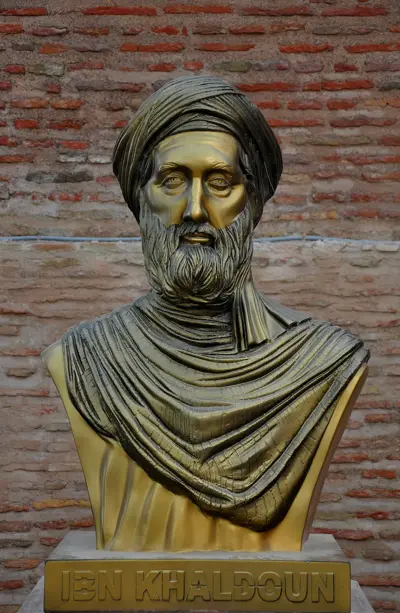
Ibn Khaldun was an Arab sociologist, philosopher and historian who has been described as the founder of the modern disciplines of historiography, sociology, economics, and demography. Niccolò Machiavelli of the Renaissance and the 19th-century European scholars widely acknowledged the significance of his works and considered Ibn Khaldun to be one of the greatest philosophers of the Middle Ages.
