C. S. Lewis Quotes
Christianity, if false, is of no importance, and if true, of infinite importance. The only thing it cannot be is moderately important.
Lewis, C. S. God in the Dock: Essays on Theology and Ethics. Eerdmans, 1970, p. 101.


He was officially hanged for his offence of making this statement on January 8, 1697. His execution, which raised considerable concern, was the last execution for blasphemy in Britain.

This oath was even in force after the American Constitution was ratified and in effect. At the time, the Bill of Rights was not believed to be binding on the States—only on the Federal Government. Throughout American history there were many practices that were unconstitutional but were simply never litigated in the courts. Local community pressure often inhibited individuals from asserting their rights in the Federal Courts as did the expense. So, for most of American history local communities forced stores to close on Sunday. When the issue was finally taken to the Supreme Court, it was clear that such a practice was in violation of the First Amendment. Even in 2011, in Atlanta, it is “illegal” to buy beer on Sunday. When someone decides to litigate that, it will likely also be declared unconstitutional. The law not only discriminates against non Christians, but there are a few Christian sects which believe that Saturday is the Sabbath.


_0_PostageStamp_47x47.jpg "Chairman of the Joint Chiefs of Staff Navy Adm. Mike Mullen gives an interview to John Dickerson during the CBS news program Face the Nation in Washington, D.C., July 5, 2009. During the interview, Mullen discussed the wars in Iraq and Afghanistan, North Korea's recent missile tests and his recent visit to Russia. (DoD photo by Mass Communication Specialist 1st Class Chad J. McNeeley, U.S. Navy/Released)")

Samuel Langhorne Clemens, 1835-1910

A century later, it would be very difficult if not impossible for anyone with these religious beliefs to obtain the Republican Presidential Nomination, as the Republican Party was controlled by conservatives and fundamentalist and evangelical Christians. However, in 1899, the fundamentalist Christians were aligned with the Democratic Party, and they referred to the Republicans as “Godless Republicans”. Taft belonged to the Unitarian Church and did attend church unlike the later President Eisenhower. See {626401}.


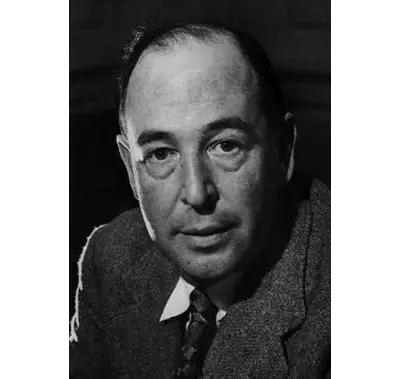
Clive Staples Lewis was a British writer and lay theologian. He held academic positions in English literature at both Oxford University (Magdalen College, 1925–1954) and Cambridge University (Magdalene College, 1954–1963). He is best known for his works of fiction, especially The Screwtape Letters, The Chronicles of Narnia, and The Space Trilogy, and for his non-fiction Christian apologetics, such as Mere Christianity, Miracles, and The Problem of Pain.
