Richard Henry Lee Quotes
Christianity, by introducing into Europe the truest principles of humanity, universal benevolence, and brotherly love, had happily abolished civil slavery. Let us who profess the same religion practice its precepts... by agreeing to this duty.
Lee, Richard Henry. Memoir of the Life of Richard Henry Lee, and His Correspondence. Edited by Richard H. Lee, vol. 1, H. C. Carey and I. Lea, 1825, p. 19.


At that time, and in much of the world today, religious preaching and those who do it are licensed by the state. Lucian’s response was one of the first statements that governments and temporal powers endorsement was not required, nor was any formal ordination or grant of authority from a formal church as existed among the pagans of the time where the religion was seen as another extension of the state. Even in America there is some ambivalence on this point. Many religions require not only training but a grant of authority from the religious hierarchy. Others such as some Baptists and many Protestant Fundamentalist groups believe that no specific authority is needed other than the “calling of god.” Lucian was apparently the first person to claim the authority as an individual. He was burnt alive for his position. There is a second Saint Lucian. To distinguish the latter is often referred to as Saint Lucian the Syrian.


American Catholic bishops were divided during the Civil War over the slavery question. For a bishop’s view opposing abolition of slavery, see Hughes {611579}.

Among the threats to the social order that Gil Robles saw was the reducing the Roman Catholic Church’s role to that of other religions whereas it had been the de facto state church.
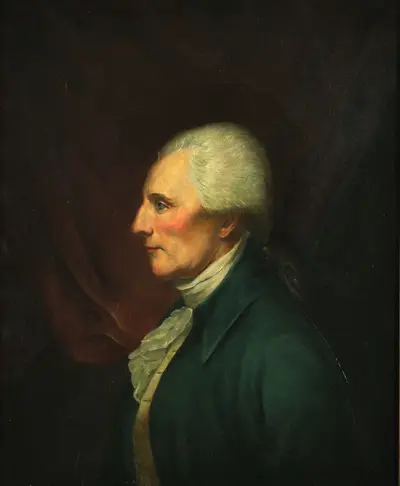
Richard Henry Lee was an American statesman and Founding Father from Virginia, best known for the June 1776 Lee Resolution, the motion in the Second Continental Congress calling for the colonies' independence from Great Britain leading to the United States Declaration of Independence, which he signed. He also served a one-year term as the President of the Continental Congress, was a signatory to the Articles of Confederation, and was a United States Senator from Virginia from 1789 to 1792, serving during part of that time as the second President pro tempore of the upper house.
