Milton Friedman Quotes
China's productive system draws upon the other East Asian countries to a great extent. The volume of trade is much larger than the net amount being exported from China. China needs substantial reserves to finance all that.


This is one of the earliest enumerations of the methods by which nations might rectify an imbalance of trade.

He had introduced a bill to provision a military garrison at the mouth of the Columbia River on the West Coast and protect and develop trade with China and India. President Monroe was for it and he persuaded the House to vote for it, but the bill to encourage foreign free trade with the Orient died in the Senate. Floyd was another American ahead of his time. . Floyd was very modern in his economic views, so much so that he, even as a Southern politician, opposed slavery on the grounds that it was economically inefficient and the South would never develop industrially if it had no incentive, as existed in the North and England, to reduce the amount of labor required for economic opportunity. He was right on that point as well.

His views are a mix of modernism and fundamentalism. He favors democracy and elections but also favored the Taliban destroying the great ancient Buddha statues when he was called an idol worshipper for urging the preservation of art. His ignorance of modern technology Is illustrated by his complaint that the Arab nations do not even “produce a single nail” for modern cars. The reality is that there are no more nails in modern cars.

This was in response to English Emissaries who wanted to establish trading businesses in China. The Emperor would not even meet personally with Lord McCartney, the first British envoy because McCartney would not kow-tow to the Emperor. The “hongs” were special businesses set up by Chinese businessmen who had paid the Proper fee, for the purposes of being traders with foreigners. Canton, now Guangzhou, is 150 years later still the major international trading center in China although there are no longer restrictions. At the time, the British paid for their Chinese good with Opium that they had purchased in their Indian Colony. English cloth and other goods would be sent to India, traded for opium, which was brought to China and traded for tea, silks and porcelain which were returned to England and turned into cash than was worth much more than their original purchase and the cost of the voyage.


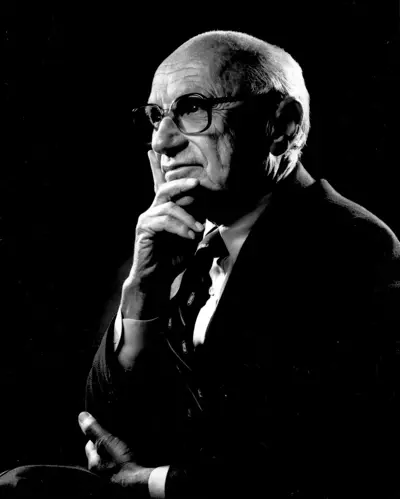
Milton Friedman was an American economist and statistician who received the 1976 Nobel Memorial Prize in Economic Sciences for his research on consumption analysis, monetary history and theory and the complexity of stabilization policy. With George Stigler and others, Friedman was among the intellectual leaders of the Chicago school of economics, a neoclassical school of economic thought associated with the work of the faculty at the University of Chicago that rejected Keynesianism in favor of monetarism until the mid-1970s, when it turned to new classical macroeconomics heavily based on the concept of rational expectations. Several students and young professors who were recruited or mentored by Friedman at Chicago went on to become leading economists, including Gary Becker, Robert Fogel, Thomas Sowell and Robert Lucas Jr.
