Deng Xiaoping Quotes
China has a history of thousands of years of feudalism and is still lacking in socialist democracy and socialist legality. We are now working earnestly to cultivate socialist democracy and socialist legality. Only in this way can we solve the problem.
Deng, Xiaoping. "Answers to the Italian Journalist Oriana Fallaci." Selected Works of Deng Xiaoping, vol. 2, Foreign Languages Press, 1984, p. 330.


Many American ideologues assumed that the Chinese Communist Revolution would lead to an economic collapse. They did not realize that historically a competitive business economic system had been operational in the Chinese culture for thousands of years. In reality the economy was however really being suppressed somewhat by the Mau style of communism. When Deng loosened up the economic rules in China, their “Communist” system not only functioned as it had under Mao, but then thrived and China became a world economic power in just a relatively few years.


Many of the communist governments of the world described themselves as “democratic socialism.”
There had been a revolution against the Qing Dynasty and an attempt to establish a republic. Wang, the spokesperson, quickly wrote an article in the Atlantic Monthly one of the most prestigious American publications. He minimized the degree of bloodshed, but by Chinese standards of civil unrest where over 20 million people had been killed in previous discords, this was relatively benign. It was a de facto military coup which also involved political assassinations which he carefully avoided mentioning, and just a few months after the publication of this article a second revolution broke out and this version of the Chinese Republic was very short lived.

China, after overthrowing the Manchu Dynasty was struggling among many factions for control of the government. Many of the potential leaders were corrupt.


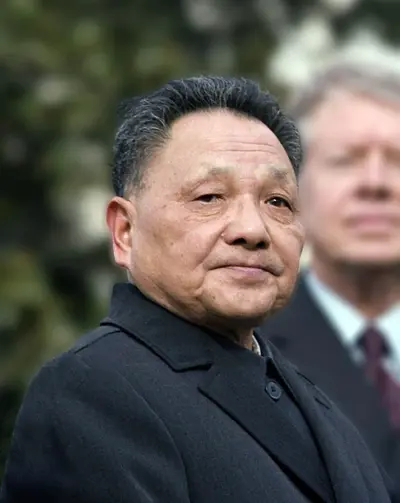
Deng Xiaoping was a Chinese revolutionary and statesman who served as the paramount leader of the People's Republic of China (PRC) from December 1978 to November 1989. After Mao Zedong's death in 1976, Deng gradually rose to supreme power and led China through a series of far-reaching market-economy reforms, earning him the reputation as the "Architect of Modern China".
