Tim Buck Quotes
Canada's ruling circles seek to ally themselves more closely with American imperialism without giving up the economic advantages of membership in the British Empire.
Buck, Tim. Canada: The Communist Viewpoint. Progress Books, 1948.


This was very much a minority opinion at the time, and has much historical significance as he was the father of the British Prime Minister, Neville Chamberlain, 1869-1940, whose appeasement of Germany led to Word War II. . See {585941}.

He was referring to the Franklin Delano Roosevelt negotiations with Churchill and Stalin at the Teheran Conference of 1943. Roosevelt insisted upon, and got his way of including China as one of the major allied powers to be among the main “Allies”. of WWII. Another factor that motivated FDR to push for China’s inclusion was that there was a very strong “China Lobby” led by Time/Life publisher Henry Luce in America that were urging such a policy.


Shortly thereafter the United States joined the allies and the First World War.

At the beginning of the Battle of Britain, it appeared that England would not be able to hold out against Germany. King was asked by Roosevelt to try and persuade British officials that if they sued for peace that they would not turn over the British fleet to the Germans but would convey it to Canada. Such an act would have produced serious retribution by the Germans.
1st Baron & 1st Marquis Curzon of Kedleston


At the end of WWII there was much tension between Russia and the Anglo-American alliance. This plan was developed but never implemented. See {613195} for Prime Minister Winston Churchill’s description of the invasion idea.


They were both children of Queen Victoria of England.

This quotation illustrates White’s extreme naivety about Stalinist Russia. At the time the Soviet Union had been backing communist insurgencies blatantly in China, Greece, and Korea for example. Most historians agree that White passed classified information to the Russians. He was accused of being a Communist, but there was never any evidence of that. Some people believe that he was a spy for the Russians and committed espionage, but others disagree observing that White was very much his own man and felt that much information that was classified never should have been. White substituted his own judgment, it is believed, about what could be given to the Russians. He was an admirer of what Russian socialism had accomplished economically, educationally and medically since the 1917 revolution deposing the Czar. Russia had been a valuable military ally, which had taken the brunt of both military and civilian casualties in WWII. White’s economics were certainly not Marxist but very much Keynesian. He was subpoenaed by the House Un-American Activities Committee where he was accused of being a Communist which he denied (see {634907}). He died of a heart attack 3 days later.

See {640831} for more on this subject.
This is the kind of threat that was used by Germany before the First World War. It worked with Turkey, but King Albert realized that being an “ally” of Germany meant losing independence anyway. Belgium would not join Germany, so the Germans invaded Belgium in 1914. Belgians fought with the allies and at the end of WWI, they were able to rebuild their independent state and thrive until they were again invaded by Germany in WWII. Turkey, in contrast, lost their entire empire, as a result of their fighting as German allies in WWI.

After the economic & power collapse of the Soviet Union, the United States was the only remaining superpower. Givern Russia's diminshed capability and many Americans still carrying resentments about the Cold War, America's foreign policy and diplomacy did not treat Russia as if they were a very important power in the world. Puten greatly resented the fact that Russia was no longer considered or treated like a world power, Russia had a nuclear arsenal and a total delivery system what was in the same destructive potential class as the United States. There were many Russiabs who had similar resentments and Putin sert out to adopt policieis and practices that would force the United States and the other nations to consider them with more dignity, respect and consdideration. This was a typical statement of the period when he was "stoking the fires of Russian resentment.


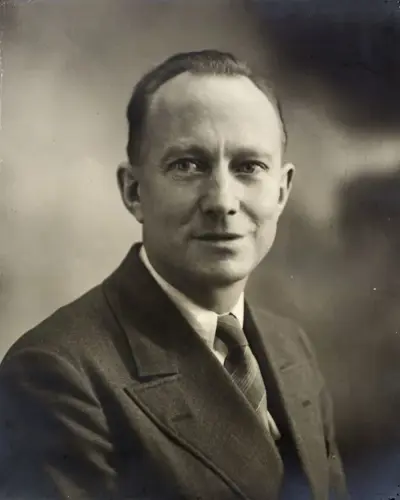
Timothy Buck was a long-time general secretary of the Communist Party of Canada (known from the 1940s until the late 1950s as the Labor-Progressive Party) from 1929 until 1962. Together with Ernst Thälmann of Germany, Maurice Thorez of France, Palmiro Togliatti of Italy, Earl Browder of the United States, and Harry Pollitt of Britain, Buck was one of the top leaders of the Joseph Stalin-era Communist International.
